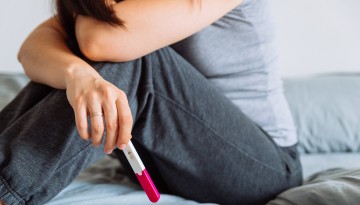
A new study testing the accuracy of existing methods used to predict the genetic variation that cause infertility found that relying on computational or in vitro experiments alone is insufficient.
To prepare for extreme heat waves around the world, running climate-simulation models that include a new, efficient computing concept may save tens of thousands of lives.
Heat-retaining buildings and paved surfaces are directly related to a loss in bird diversity, according to a study by scientists at the Cornell Lab of Ornithology and Zhejiang University in China.
Local farmers and growers, Cornell officials and others observed the 100th anniversary of the Hudson Valley Research Laboratory, part of Cornell AgriTech, in a celebratory event Aug. 18 in Highland, New York.
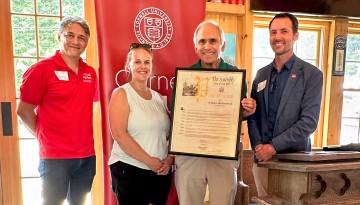
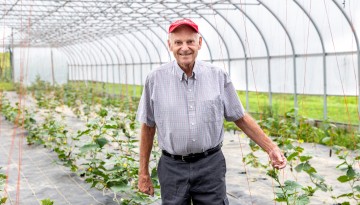
After a lifetime of farming, developing delicious cabbage and serving the Cortland community, Don Reed ’62 was presented with Cornell’s 11th New York State Hometown Alumni Award.
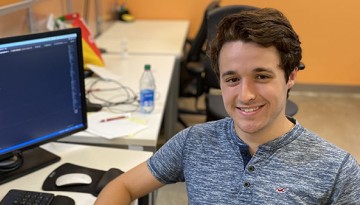
After an exciting summer of research, students from the Cornell Bowers CIS BURE program shared their results with faculty, mentors, and fellow students.
Feuerstein has founded several digital health companies and is the executive director and founder of Yale School of Medicine’s Center for Digital Health and Innovation.
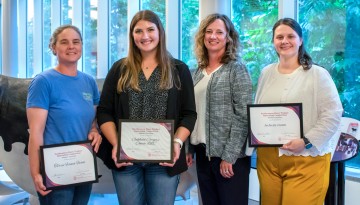
Three dairy innovators – lu.lu Ice Cream, Oakfield Corners Cheese LLC and Terra Firma Farm – were named winners of the inaugural Northeastern Dairy Product Innovation Competition following a pitch competition on Aug. 8 in Stocking Hall.
Current methods can vastly overestimate the rates that malaria parasites are multiplying in an infected person’s blood, which has important implications for determining how harmful they could be to a host, according to a new report.