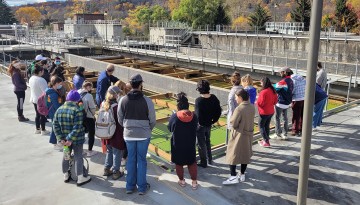
With funding from the Einhorn Center for Community Engagement, teams of Cornell faculty, staff and community partners are creating new community-engaged learning opportunities for undergraduates.
Research by J. Nathan Matias, assistant professor of communication in CALS, found that Reddit community members who fact-checked suspect stories led to those stories being dropped in the website’s rankings.
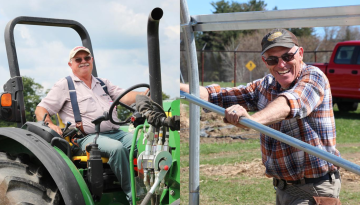
Cornell Agricultural Experiment Station farm managers Steve McKay and Paul Stachowski have retired after 38 and 32 years of service to the university, respectively.
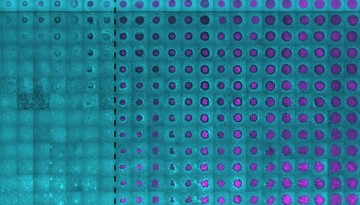
Cornell researchers developed a multimodal platform to image microbe-semiconductor biohybrids with single-cell resolution, to better understand how they can be optimized for more efficient energy conversion.
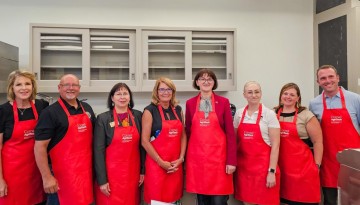
A new research and test kitchen for food entrepreneurs has opened at Cornell AgriTech, further enriching a robust ecosystem designed to help grow New York’s food and agriculture industries.
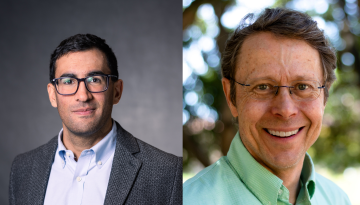
As concerns about climate change intensify, researchers are exploring the potential for large-scale human intervention in the Earth’s climate system, a strategy sometimes referred to as geoengineering. Two leading researchers in the area discuss how their research in sunlight reflection methods fits into the bigger picture of potential climate solutions.
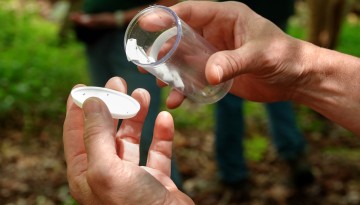
Researchers are hoping a fly no larger than a grain of rice and a predatory beetle may work together to combat an invasive pest that is devastating hemlocks in Fall Creek and throughout eastern North America.
Cornell researchers have successfully transferred key regions of a highly efficient red algae into a tobacco plant to dramatically improve plant productivity and increase carbon sequestration.
Trustee emeritus and Central New York farmer Robert “Bob” Bitz ’52, a longtime supporter of the university who was instrumental in helping organize Cornell’s first advisory committee on planned giving, died June 17. He was 92.