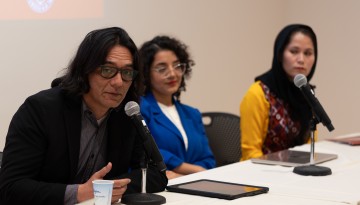
An event featuring threatened artists from Nicaragua and Afghanistan kicks off Global Cornell’s contribution to this year’s campuswide theme, “The Indispensable Condition: Freedom of Expression at Cornell.”
Doctoral candidate Alexander Cruz and Professor Jonathan Butcher and doctoral candidate Don Long and Professor Praveen Sethupathy were selected for the 2023 Howard Hughes Medical Institute Gilliam Graduate Fellows Program.
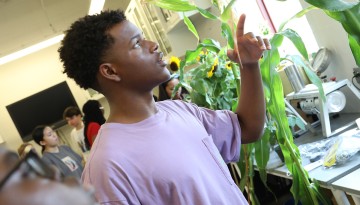
The CATALYST Academy engineering program at Cornell teamed up with CROPPS to discover how engineering and technology play major roles in plant science and agriculture.
An interdisciplinary team led by Cornell has received a five-year grant to launch a new center for engineering, testing and commercializing point-of-care diagnostic devices that will have international reach.
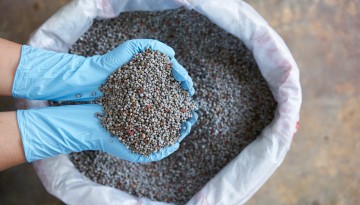
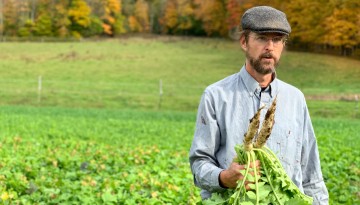
A survey of farmers in four Northeast states, including New York, found that incentive payments encouraged participants to plant twice as many acres of cover crops as they did prior to receiving funds – a change that can both improve their farms and mitigate climate change.
Fungal biologist Lori Huberman will use a $1.9 million grant from the National Institutes of Health to study how fungi sense and use nutrients, basic research with potential applications for treatment of cancer, obesity, Type 2 diabetes and fungal infections.
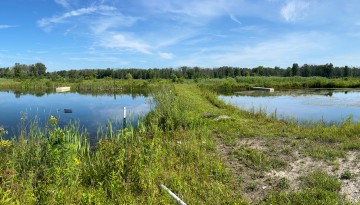
Though human-made ponds both sequester and release greenhouse gases, when added up, they may be net emitters, according to two related studies by Cornell researchers.
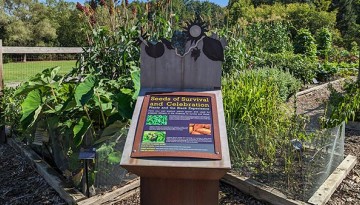
The exhibition "Seeds of Survival and Celebration: Plants and the Black Experience" returned for a second season with an expanded plant collection, which honors the lasting influence of the formerly enslaved and their descendants on American culture.