The 20 finalist startups battling for $3 million in prize money in the fifth annual Grow-NY Food and Agriculture Business Competition were selected from more than 320 applicants, including 81 entries from New York state.
A project headed by Christine L. Goodale, professor of environmental sciences, and funded by the Department of Energy will contribute to understanding of the role the nitrogen cycle plays in estimates of future carbon uptake by the biosphere.
The Northeast Regional Center for Excellence in Vector-Borne Diseases, led by Cornell, has received a five-year, $8.7 million award from the Centers for Disease Control and Prevention to train and educate vector-borne disease professionals.
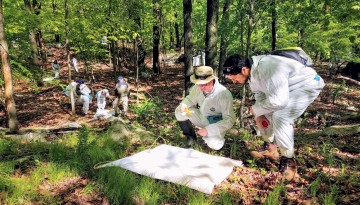
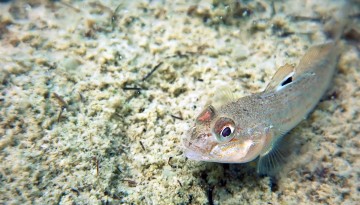
The genetic material that species shed into their environments can reveal the presence of the species and a broad range of information about the genetics of entire populations.
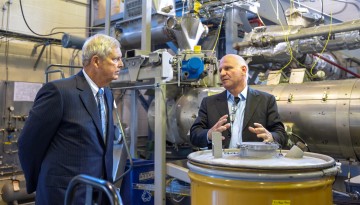
U.S. Agriculture Secretary Tom Vilsack visited the College of Agriculture and Life Sciences on Sept. 6 to discuss programs focused on empowering farmers and finding new climate solutions that are equitable and science-based.
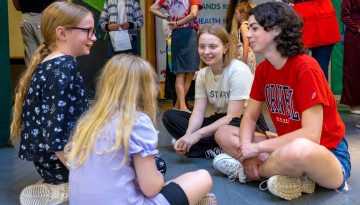
Designs by 4-H youth hit the runway at the 4-H Fashion Revue at the New York State Fair, with Cornell students and faculty inspiring the young fashion designers with feedback and discussions about design thinking and innovation.
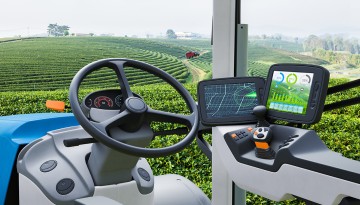
As the world seeks to avoid climate extremes, employing state-of-the art agricultural technology could result in more than 13 billion tons of net negative greenhouse gas emissions annually.
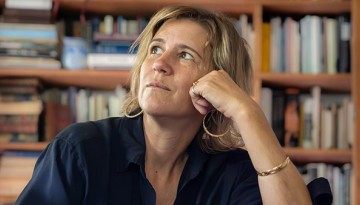
Sonnet Kekilia Coggins, executive director of the Merwin Conservancy, will explore the life and legacy of W.S. Merwin in the Torrence Harder Lecture, “What is a Garden? W.S. Merwin’s Life in Poems, Palms, and Place,” Sept. 13 in Call Auditorium.