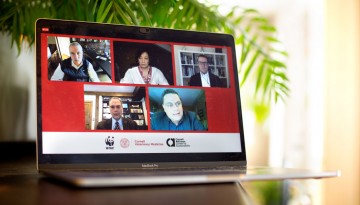
Future pandemics can be averted if the world’s governments eliminate unnecessary wildlife trade and adopt holistic approaches, according to experts at a Feb. 23 virtual conference.
A study conducted by the Lab of Ornithology’s Center for Conservation Bioacoustics found that when ambient underwater noise gets too loud, the bearded seals are no longer able to compensate in order to be heard.
An animal scientist studying relationships between insulin and milk production in dairy cows has received a three-year, $500,000 grant from the U.S. Department of Agriculture National Institute of Food and Agriculture.
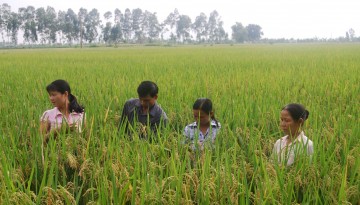
The System of Rice Intensification (SRI) has been named as a 2020 climate policy "breakthrough" for government initiatives in Vietnam to increase agricultural production there while reducing methane emissions from rice paddies.
A Cornell doctoral student’s analysis of Chinese policies found that, contrary to conventional wisdom, market-based or incentive-based policies may actually benefit regulated firms in the traditional and “green” energy sectors.
New research from the lab of Cedric Feschotte in CALS investigates how genetic elements called transposons, or “jumping genes,” are added into the mix during evolution to assemble new genes.
The CAT Lab, led by J. Nathan Matias, assistant professor of communication in CALS, recently received nearly $1.3 million in grants to further its citizen science studies on the effects of digital technology on society.
Jenny Goldstein, an assistant professor of global development in the College of Agriculture and Life Sciences, has been named a 2021-22 faculty fellow in the Cornell Center for Social Sciences to develop an ambitious research project focused on environmental rehabilitation in Indonesia.
A new study identifies the mechanism for tolerance to penicillin and related antibiotics in bacteria, findings that could lead to new therapies that boost the effectiveness of these treatments.