Students examined issues from the logistics of vaccine storage and transportation, to the disinfection of public spaces, and the sanitation and reuse of personal protective equipment.
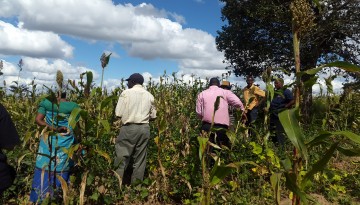
Two graduate students have received funding for research focused on increasing food security in Africa from the Cornell Atkinson Center for Sustainability.
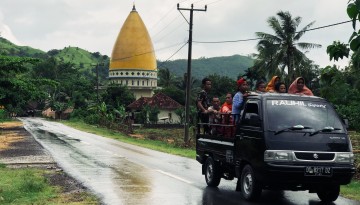
Jenny Goldstein, assistant professor of global development, studies the intersection of power dynamics, the environment, and the meaning of place and space in Indonesia.
New grants from the Migrations initiative seeks to support work in migrations-related research, pedagogy and engagement with a specific focus on racism and dispossession.
The Office of Academic Integration has awarded $750,000 in seed grants to 10 studies ranging from refugee health and legal rights, to a vaccine treating fentanyl addiction and overdose, to pancreatic cancer and antibiotic tolerance.
A year after the provost announced plans to create a School of Public Policy, following a multiyear review of how to elevate Cornell’s excellence and prominence in the social sciences, the search for its first dean is underway.
Researchers discover that Australia’s superb lyrebird males imitate the panicked alarm calls of a mixed-species flock of birds while they are courting and even while mating with a female.
In partnership with New York community groups, Cornell researchers are developing a hyperlocal weather forecasting system designed to help emergency response.
Robert Seaney, Ph.D. ’55, professor emeritus of soil and crop sciences who’s best known for his research on identifying the best forages for New York state soils and climate, died Jan. 19 in Petersburg, Illinois. He was 93.