Moshood Agba Bakare, a Ph.D. student in the field of plant breeding and genetics, has been awarded the Africa Fund Fellowship for graduate work focused on cassava breeding in sub-Saharan Africa.
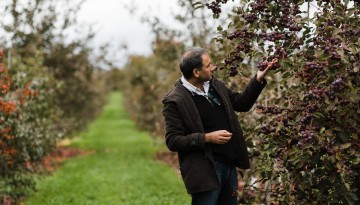
Rapid Apple Decline is a mysterious phenomenon that has been killing apple trees suddenly and without probable cause, leaving growers and scientists bewildered. Two scientists from CALS are on a mission to find its root cause.
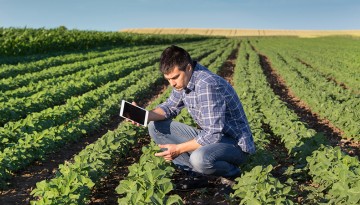
An app that would maximize profit and minimize food spoilage and loss across the agriculture supply chain was named the grand prize winner in the third annual Cornell Institute for Digital Agriculture Hackathon.
A team led by a Boyce Thompson Institute researcher has identified genes enabling peaches and their wild relatives to tolerate stressful conditions – findings that could help the domesticated peach adapt to climate change.
A $30 million commitment from David R. Atkinson ’60 and Patricia Atkinson will name a new multidisciplinary building on campus, intended to foster innovative and collaborative research in key university priority areas.
Tory Hendry, Tashara Leak and Atieh Moridi are winners of the 2021 awards, which help recipients acquire preliminary data and launch innovative research directions.
Jeffrey Perry ’89, Ph.D.’ 18, senior lecturer of global development, received the Golden Owl award on Feb. 23 in honor of his contributions to agricultural education in New York state.
Even when grants fund network construction, high operating costs pose significant challenges for rural broadband cooperatives seeking to expand access, according to new research from the Charles H. Dyson School of Applied Economics and Management.