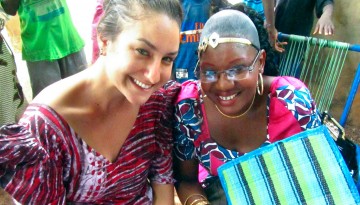
Like thousands of other Cornellians who have volunteered for the Peace Corps, Amanda Freund ’06 and Janet Smith, M.S. ’19, share common ground: learning from the people they served.
New research reveals that a recently discovered songbird has traveled a very rare evolutionary path – a finding that challenges the typical model of how new species form.
Cornell students will have the opportunity for hands-on learning about ecological and social approaches to agricultural systems thanks to a new fellowship in the College of Agriculture and Life Sciences.
Cornell experts, including Neil A. Lewis Jr. ’13, assistant professor of communication and social behavior, have been part of several efforts to increase access and increase vaccine confidence, particularly in underserved communities.
Under Anu Rangarajan’s direction, the Cornell Small Farms Program builds networks and cultivates relationships among new, aspiring, and longtime farmers across the state. During the past year, when staying connected feels harder than ever, Rangarajan, also an assistant director of Cornell Cooperative Extension, and her team created space for human connection and personal reflection.