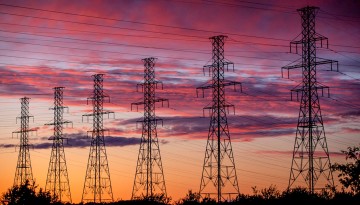
By delving into scientific and economic data, Cornell engineers have examined whether New York could achieve a statewide carbon-neutral economy by 2050. Their finding: Yes – and with five years to spare.
Each year, the Center for Teaching Innovation grants funding through the Innovative Teaching & Learning Awards to help faculty explore new strategies and tools for enhancing student learning.
Cornell bioengineers have found a way to efficiently absorb and store large-scale, renewable energy from the sun, while sequestering carbon dioxide to use as a biofuel: Let microbes do the work.
With a recent 90% decline in population, sunflower sea stars – once ubiquitous all along the Pacific Coast, from Mexico to Alaska – may be on the brink of extinction.
To deflect future world food crises created by climate change, a Cornell-led international group has created a road map for global agricultural and food systems innovation.
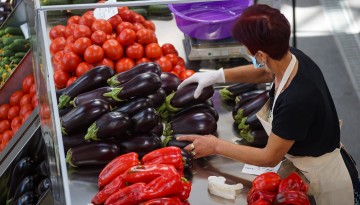
Food businesses and consumers coping with COVID-19 impacts in five countries in Asia and Africa now have access to customized resources, and experts mentored by the Institute for Food Safety at Cornell University.
The New York Power Authority is partnering with the Cornell Climate Smart Solutions Program to deliver a comprehensive training program to its nearly 2,400 employees in New York.
Cornell Atkinson is soliciting nominations for The Earthshot Prize, a new global award supported by The Duke and Duchess of Cambridge to tackle the world’s biggest environmental challenges.
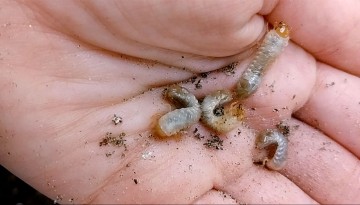
A team of Cornell scientists will use acoustic technology to develop efficient and affordable ways to manage soil-dwelling pests and their predators, thanks to a two-year grant from the USDA.