A Cornell project funded by two separate three-year grants will develop worm-like, soil-swimming robots to sense and record soil properties, water, the soil microbiome and how roots grow.
A multi-institution team co-led by a Cornell researcher has identified the genetic mechanisms that enable the production of a deadly toxin called Victorin – the causal agent for Victoria blight of oats, a disease that wiped out oat crops in the U.S. in the 1940s.
Women and underrepresented minority faculty members engaging in life science research have until Dec. 11 to apply for a grant from the Schwartz Research Fund for Women and Other Underrepresented Faculty in the Life Sciences.
Working with Walmart Inc., researchers in the College of Agriculture and Life Sciences have developed an online greenhouse gas emissions accounting tool, FAST-GHG, to help quantify these emissions in crop production.
Olivia Graham joined five-dozen scientists on four continents to create a marine biology first: a global map to show where the ocean’s mid-sized predators are most active in a climate-changing world.
The Feed the Future Innovation Lab for Food Safety has announced $2.9 million in grants for research projects to improve food safety and prevent foodborne illness in Bangladesh, Cambodia, Kenya and Senegal.
Cornell food scientists confirm that the grain teff helps the stomach and enhances the nutritional value of iron and zinc, according to a new modeling method.
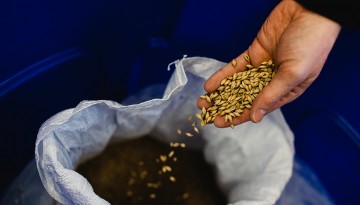
Cornell has developed the first variety of spring malting barley designed to succeed in New York’s wet climate and support the state’s $5 billion craft beer industry. All it needs now is a name.