Cornell economic research shows that lawfully solo-driver hybrids cars are clogging California's carpool lanes on Interstate highways, which defeats the purpose of those lanes.
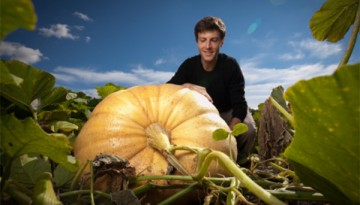
Relay teams hope to squash their competition at the first Big Red Pumpkin Regatta on Beebe Lake Saturday, Oct. 4. It is hosted by a graduate student group Cornell Flotilla.
The Sept. 22 grand opening of Rev: Ithaca Startup Works drew more than 100 local government leaders, business partners and higher education officials to celebrate the collaborative venture’s newly finished space, and to welcome its first four members.
The Department of Neurobiology and Behavior celebrates its 50th anniversary this year. About half of the department's doctoral alumni will return to campus Nov. 1.
Procuring the sun’s vital energy, Cornell has electrifying news: The Cornell Snyder Road Solar Farm – teeming with 6,778 freshly installed photovoltaic panels, is set to go live Sept. 19.
A comprehensive study of gene expression in tomato fruits will explore unanswered questions about fruit development and drought resistance, to improve crop quality and yields.
Closed for six years of storm-related repairs, the Cascadilla Gorge Trail – from College Avenue to Treman Triangle Park in downtown Ithaca – reopened Monday, Sept. 15, with the ceremonial exhortation: “Go take a hike!”