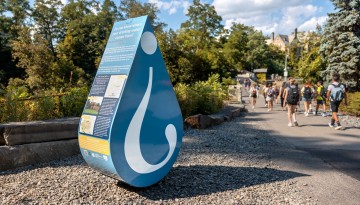
Turning on a faucet for a drink rarely elicits deep thoughts on how the water got there. But two new Water Resources Institute “water drops” are packed with a torrent of information.
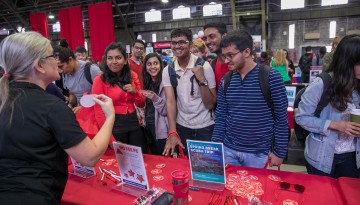
A resource fair on Monday, Sept. 12 will bring together incoming and continuing graduate and professional students from all colleges and programs to showcase more than 60 different resources from all over campus.
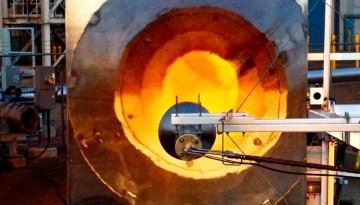
Assistant Professor Sadaf Sobhani is leading a $50,000 FuzeHub grant in partnership with ceramic 3D-printing company Lithoz America and energy startup Dimensional Energy to develop 3D-printed ceramics for clean energy reactors.
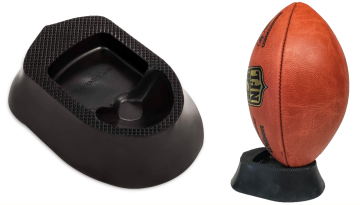
Every National Football League game since the 1999-2000 season has used the patented Ground Zero 1 kicking tee invented by Cornell Engineering alum H. Jay Spiegel ’74.
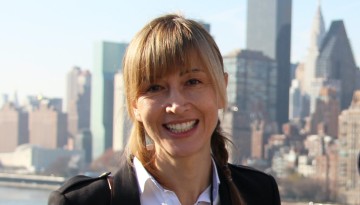
Silvia Ferrari, the John Brancaccio Professor of Mechanical and Aerospace Engineering, will serve as the inaugural associate dean for cross-campus engineering research, reporting to the deans of Cornell Tech and Cornell Engineering.
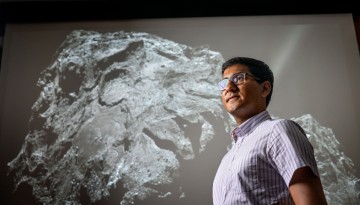
With an eye toward a return to Comet 67P, Cornell astronomers show how smooth terrain – a good place to land spacecraft and scoop samples – develops on the icy world of touring comets.
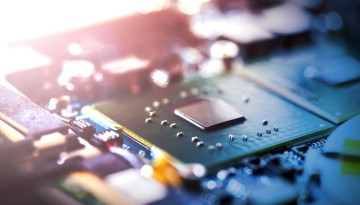
“Quantum Physics of Semiconductor Materials and Devices” authored by Professor Debdeep Jena, molds scientific subjects such as quantum mechanics, thermodynamics and electromagnetism, all under the umbrella of the semiconductor materials and devices that have become ubiquitous in daily life.
The Presidential Advisors on Diversity and Equity have awarded three Belonging at Cornell innovation grants for 2022 programming, for projects addressing a range of topics involving diversity, equity and inclusion on all of Cornell’s campuses.
Now in its third year, CSMore has grown into a rigorous one-month program for potential CS majors, complete with course prep, faculty research talks, a full slate of social activities, and networking opportunities with major companies.