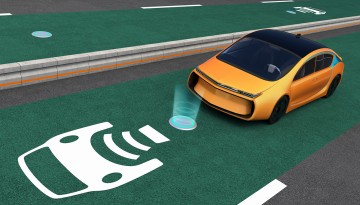
Efficient pricing will be crucial to minimize energy costs for private operators who provide on-the-highway wireless charging for electric cars – and for consumers who will use this service.
For 10 weeks over the summer, the 13 students in the 2022 cohort of the Kessler Fellows program spread across the globe to gain firsthand experience working for startups.
Popular Science’s 2022 list of “the top up-and-coming minds in science” includes Samitha Samaranayake, assistant professor in of civil and environmental engineering, citing his work to design algorithms to help varied modes of mass transit work more seamlessly together.
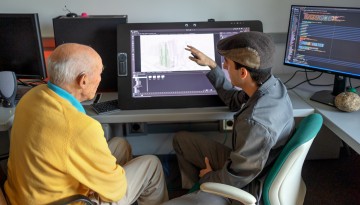
At 88 years old, professor Don Greenberg ’55 is still on the cutting edge: He’s launched a new undergraduate and graduate course for students in both architecture and computer science, “Design in the Age of Digital Twins.”
President Martha E. Pollack announced the faculty members honored with the Stephen H. Weiss Awards, which recognize excellence in undergraduate teaching and mentoring.
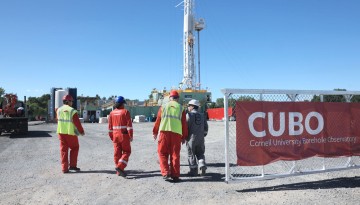
The Cornell University Borehole Observatory provides a platform to directly study the temperature, permeability and other characteristics of the rock deep beneath the Ithaca campus – factors that will help the university determine whether to move forward with a proposed plan to warm the Ithaca campus with Earth Source Heat.
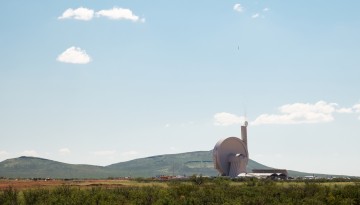
After successfully launching small spacecraft out of a novel suborbital accelerator, Cornell Engineering faculty and students may have exciting new opportunities to expand research and exploration of ChipSats.
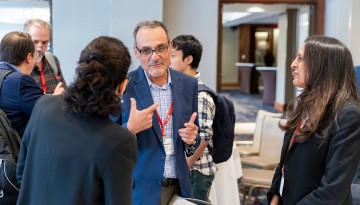
More than 70 faculty from Weill Cornell Medicine, Cornell Engineering and Cornell Tech assembled Oct. 1 at the Statler Ballroom — and more joined remotely — to kick off the Cornell Engineering Innovations in Medicine initiative.
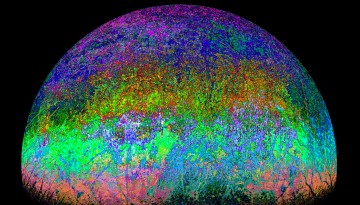
For Cornell scientists, new images from NASA’s Juno spacecraft flyby Sept. 29 of Jupiter’s moon Europa – an icy, oceanic world that may host life – brings future mission into frigid focus.