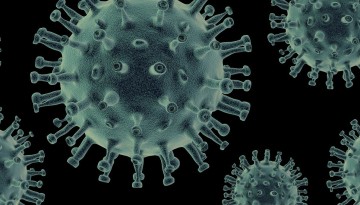
A new Cornell research project aims to gain a better understanding of how populations of microbes interact on surface environments, such as human skin, where their dynamics are not fully understood.
Two Cornell graduates, CEOs of Praxis clients REEgen and Soctera, benefit from the vibrant innovation ecosystem at Cornell and Activate’s immersive fellowship program for science entrepreneurs.
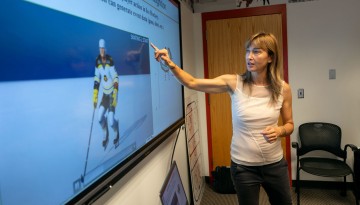
The algorithms are unique in that they take a holistic approach to action anticipation, combining visual data – where an athlete is located on the court – with information like an athlete’s specific role on the team.
A group of researchers led by Cornell is unlocking the full potential of aluminum nitride – an important material for the advancement of electronics and photonics – thanks to the development of a surface cleaning technique that enables high-quality production.
A mummified bird – and the research into its historical context and extraordinary afterlife – will be on display in an exhibition that runs Oct. 7-9, from 9 a.m. to 7 p.m., in Upson Hall’s Lounge 116.
Halomine and Inso Biosciences – both from Cornell incubators – have received $3 million in New York state grants to help thwart disease outbreaks and expand the state’s life science industries.