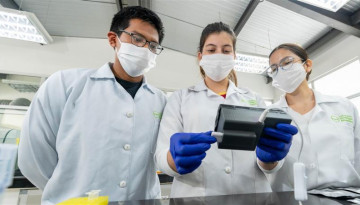
Five next-generation point-of-care technologies have been selected for funding by PORTENT, a Center for Point-of-Care Technologies for Nutrition, Infection, and Cancer at Cornell, focusing on crucial healthcare across the globe.
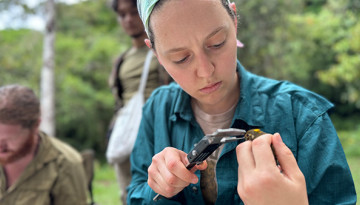
Cornell Atkinson has announced 40 research grants to support undergraduate and graduate student researchers whose work will support sustainability, biodiversity and agriculture.
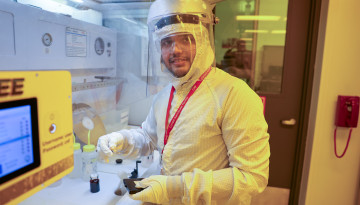
Nandan Reddy Muthangi, an M.Eng. student in Cornell’s Department of Materials Science and Engineering, is partnering with a company to develop new methods for building semiconductor test chips that improve manufacturing reliability.
A team of geophysicists from Cornell, Cameroon and South Africa is using machine learning tools to unearth new information from earthquake data collected by Cornell 15 years ago – providing a lifeline for a scholar whose career was upended by conflict.
The first phase of the university’s upcoming reaccreditation process is underway, with the naming of a steering committee and an invitation to the community to provide input.
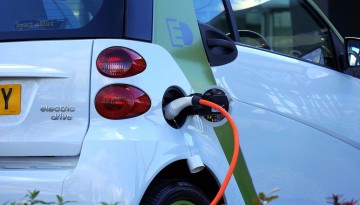
A new study finds that the global shift to electric vehicles could significantly reduce energy use and carbon emissions, but only if governments act aggressively to lower costs and align policies across regions.
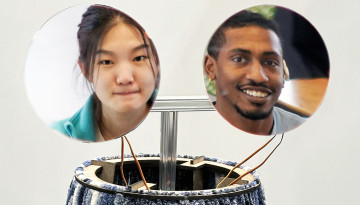
Cornell researchers developed a dual mirror-equipped robot, MirrorBot, that spurred conversations, playful exchanges and other interactions between strangers sparked by initial eye contact made in the mirrors.
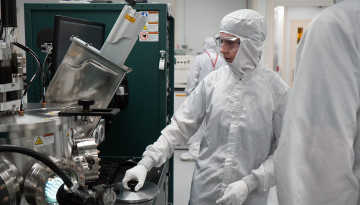
A $9.5 million investment in the Cornell NanoScale Science and Technology Facility from Duffield Engineering will position the facility for its next era of leadership in semiconductor research, education and workforce training.