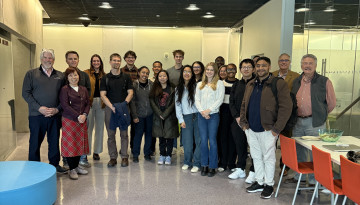
Researchers from the Cornell Duffield College of Engineering and the Cornell Bowers College of Computing and Information Science are teaming up with the Toyota Research Institute for projects involving AI personalization and robotics.
The Graduate Excellence and Impact Awards recognized members of the graduate community for their impacts on advancing access, engagement and belonging through service and leadership.
Researchers found entropy can help bind certain pairs of molecules faster and more robustly – an approach that could have broad applications in drug development and forming new materials.
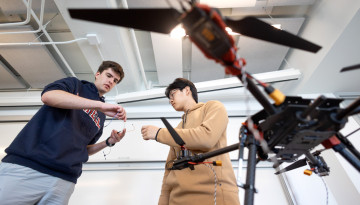
Students in a Duffield Engineering class are equipping a racing baton and a flying drone with Internet of Things technology to address challenges in and around Geneva, N.Y.
At the annual Cornell Engineering Alumni Association awards banquet held on May 1 in Upson Hall, members of the Cornell Duffield College of Engineering community were recognized for excellence in teaching, student mentorship, undergraduate research, student leadership and experiential learning.
From advanced microscopes that peer deep into living tissue to software that maps transportation emissions, Cornell students presented commercialization strategies for technologies developed by engineering faculty during the Innovation Collaborative final presentations on May 1 in Gates Hall.
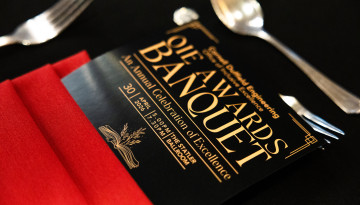
The Office of Inclusive Excellence in the Cornell Duffield College of Engineering recognized outstanding undergraduate and graduate students, student organizations and staff at their Annual Awards Banquet on April 30.