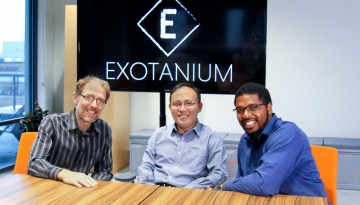
The Commercialization Fellowship, which wrapped up its fifth cohort in December 2020, helps engineers turn their academic research into businesses that solve real-world problems.
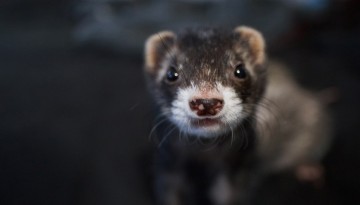
Cornell researchers have helped develop a nasal formulation that blocks the spread of COVID-19 among ferrets – and are hopeful the formulation could have the same effect on humans, and potentially generate therapeutic treatments as well.
Four early-career faculty members have won 2021 Sloan Research Fellowships from the Alfred P. Sloan Foundation, which support research and education related to science, technology, mathematics and economics.
Olivia Adams ’14 M.Eng ’15 saw a problem: people in Massachusetts were having a difficult time signing up for COVID-19 vaccine appointments. So, she built a solution
Nearly two years after launching, the Praxis Center for Venture Development is reconfiguring its structure to reflect the growth of engineering startups at Cornell and their specialized needs.
Cornell faculty members Jefferson Tester and Lance Collins are among the new class elected to the academy, among the highest professional distinctions for an engineer.
Cornell researchers have created a low-cost method for soft, deformable robots to detect a range of physical interactions, from pats to punches to hugs, without relying on touch at all.
A new research project will seek an integrated approach to turning sludge, dust and slag into valuable materials by improving the recovery and quality of waste products using carbon dioxide.