Two New York state companies have been chosen to participate this spring in the Cornell Center for Materials Research JumpStart Program, through which they will collaborate with faculty members to develop and improve their products.
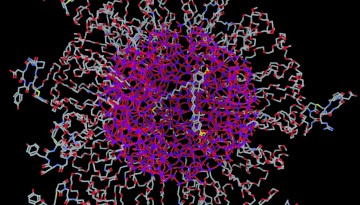
Elucida Oncology, a biotechnology company based on C Dots – ultra-small nanoparticles developed at Cornell that show promise in identifying and fighting cancer – recently secured $44 million in financing.
The seminar explores the ways in which women, people of color and others have been marginalized in science, technology, engineering and mathematics and how to address exclusion.
Researchers devised a new method of using extracts to create shelf-stable vaccines on demand, a potentially game-changing approach to fighting infection in regions that have limited access to such medicines.
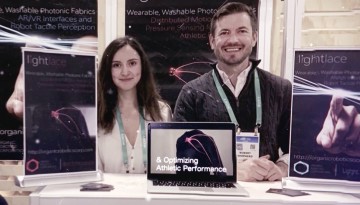
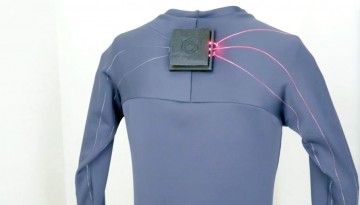
Cornell Engineering startup Organic Robotics Corporation and its stretchable sensing technology, Light Lace, topped a field of four finalists to win the sixth annual NFL 1st & Future competition, sponsored by the National Football League.
Dimensional Energy – a McGovern Center startup that converts carbon dioxide via sunshine into eco-friendly aviation fuel – is a finalist for the $20 million Carbon X Prize.
Cornell wind energy scientists have released a new global wind atlas – a digital compendium filled with documented extreme wind speeds – to improve turbine placement.
Organic Robotics Corporation, a Cornell engineering startup founded in 2018, is in the finals the sixth annual NFL 1st & Future competition, airing Feb. 2 at 8 p.m. EST on the NFL Network.
Professor Iwijn De Vlaminck is working on using cell-free DNA – discarded scraps of DNA – as a way of gaining understanding of COVID-19’s effects on the organs of children who've been exposed to the SARS-CoV-2 virus.