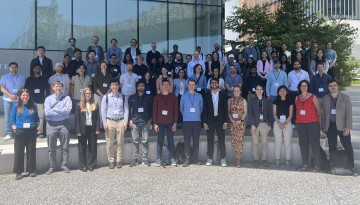
Researchers from around the world gathered at Cornell Tech for a workshop exploring how physics-aware artificial intelligence can accelerate the discovery of molecules and materials while improving the reliability of machine learning models.
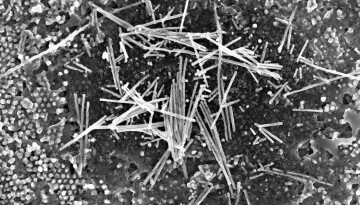
Researchers developed a potential replacement for the tiny copper interconnects in microchips: single-crystal nanowires that become better conductors the thinner they get.
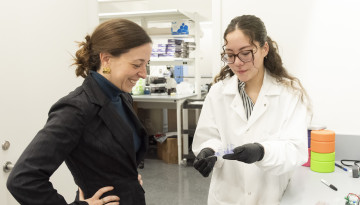
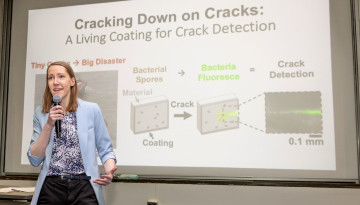
A new Duffield Engineering biomedical engineering course will challenge students to investigate real-world failures in women’s health technologies and identify opportunities for better design.
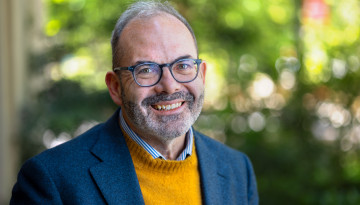
Marx will establish and serve as inaugural director of the Cornell Center for Entrepreneurship and Innovation, to boost university efforts to commercialize breakthrough scientific discoveries.
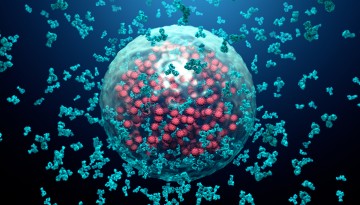
A $13.3 million grant from the NIH will support efforts to reveal how immune cells communicate within living tissues, which could shape new approaches for treating inflammatory diseases, autoimmune disorders and infections.
Cornell 2026 Three Minute Thesis (3MT) winner Ellen van Wijngaarden, Ph.D. '26, won first place in the Ivy+ 3MT, where she competed against students representing eight peer institutions.
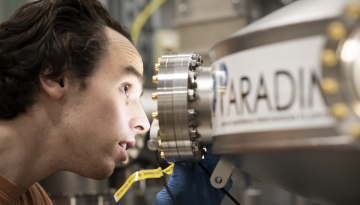
A late-night “Eureka” moment, a smashed computer and 17 years of persistence led researchers to achieve what many in microwave electronics had long considered out of reach: a tunable, low energy loss class of dielectric materials.
The 16 grants are the most the SPROUT program has awarded in a single cycle and support a broad range of promising projects in AI, medicine, semiconductors, sustainability and more.