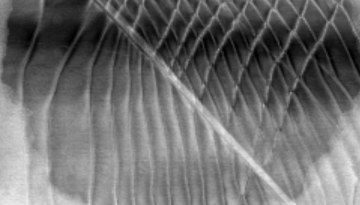
Cornell researchers have developed a new way to create moiré patterns – atomic-scale structures that can give materials unusual quantum behaviors – without relying on the twisting and stacking methods traditionally used.
Researchers identified very different mechanisms behind two historic eruptions of Mount Etna in Italy – a finding that can help geologists assess the risk of future eruptions.
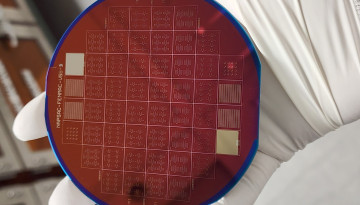
Cornell researchers have developed a computing device that stores information electrically but reads it through tiny mechanical motion, an approach that could open a path toward more energy-efficient hardware for AI and scientific computing.
New research from a team of scientists led by Cornell is transforming how researchers understand one of the atmosphere’s most abundant and least understood constituents: mineral dust.
The Cornell Duffield College of Engineering will accelerate its Engineering Innovations in Medicine initiative, which aims to revolutionize how biomedical data is acquired, computed, and translated into impact.
The Cornell Ann S. Bowers College of Computing and Information Science’s celebrated their newest graduates in department recognition ceremonies during Commencement weekend.
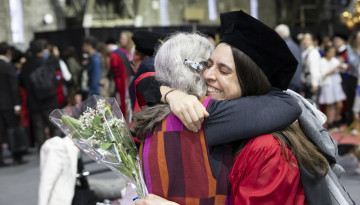
Doctoral candidates in the Class of 2026 were encouraged to work toward making the world a better place at the Ph.D. Recognition Ceremony, held May 22 in Barton Hall.
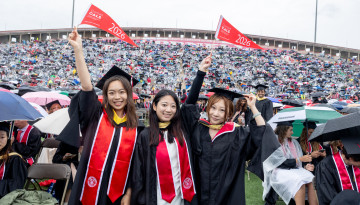
The Class of 2026 has the tenacity, talent and determination to advance the unfinished work of American democracy, President Michael I. Kotlikoff told graduates and their guests at Commencement ceremonies held May 23.