Cornell Prime dots – known as C’ dots – are effective against prostate tumors, according to a new preclinical study led by investigators at Weill Cornell Medicine and the Cornell Duffield College of Engineering.
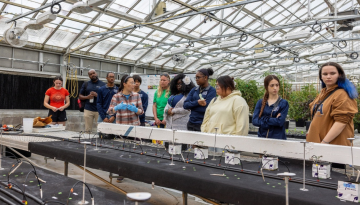
Students from Buffalo's McKinley High School — home to one of the few high-school horticulture programs in New York state — visited Cornell May 19 to view the work of the Center for Research on Programmable Plant Systems (CROPPS).
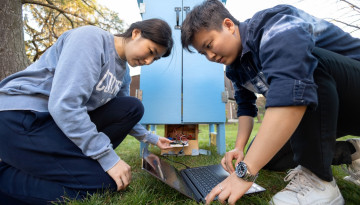
Led by Lauren Stulgis, the Engaged Engineering initiative announced its first grants, backing projects that use engineering to serve communities through environmental monitoring, AI and data analytics, and mechanical design.
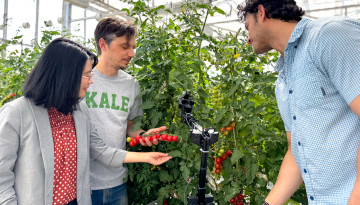
Cornell Atkinson has awarded $900k to support six new research projects that seek to protect coral reefs, improve greenhouse agriculture and understand whether wildfires affect disease spread.
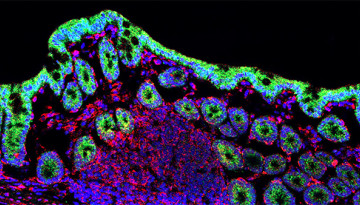
Kanvas Biosciences announced a $48 million Series A funding round, which will support a clinical trial later this year for the company’s lead cancer immunotherapy treatment.
Kapil Gangwar will participate as a Young Scientist in the 75th Lindau Nobel Laureate Meeting in Lindau, Germany, bringing together Nobel laureates and promising early-career researchers from around the world.
The group of 50 scholars will talk about how to build an undergraduate educational experience that crosses both disciplinary boundaries and institutional lines.