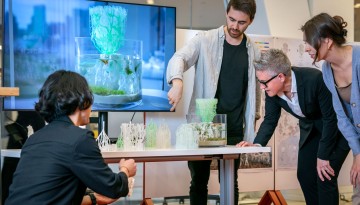
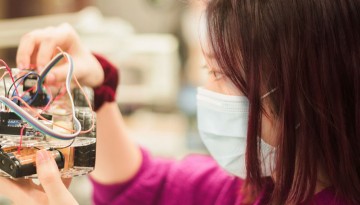
Cornell has established the Department of Design Tech, a Radical Collaboration partnership between five colleges that seeks to enhance design and technology education and research across the university.
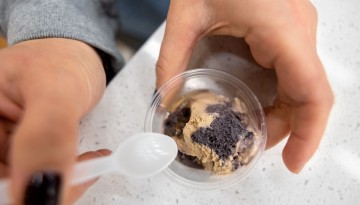
For their ice cream final project, students in Cornell’s introductory food science class – this year sweetened by a Renaissance theme – harkened back 500 years to explore flavors from antiquity.
Twenty Cornell faculty members were awarded Affinito-Stewart research grants for the 2022-2023 academic year. The grants, which are awarded by the President’s Council of Cornell Women (PCCW), provide junior faculty members from across the university with up to $10,000 in research funding.
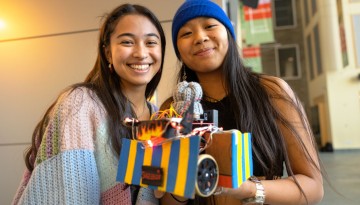
Simplicity was a winning strategy for a trio of engineering students in the annual Cornell Robotics Competition, held Dec. 1 in the Duffield Hall atrium.
For their work inventing heart-assist devices and biomaterials for tissue regeneration, respectively, Cornell Engineering professors James Antaki and Yadong Wang have been elected fellows of the National Academy of Inventors.
The continued sales growth of electric passenger vehicles will be having a greener, cleaner influence on air pollution in most metro U.S. regions, all the while reducing human death by mid-century.
Researchers combined optical sensors with a composite material to create a soft robot that can detect when and where it was damaged – and then heal itself on the spot.
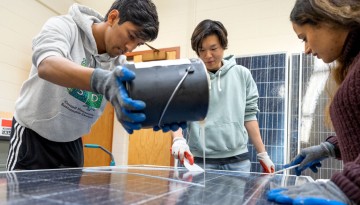
Using polyurethane, resin, epoxy – and gallons of wit – the Solar Panel Reboot student team, part of the Cornell University Sustainability Design, provides an afterlife to old, broken photovoltaic boards.
The robot’s layered filtration system will gather tiny bits of plastic the size of a sesame seed and smaller, which contaminate ecosystems and damage human and animal health.