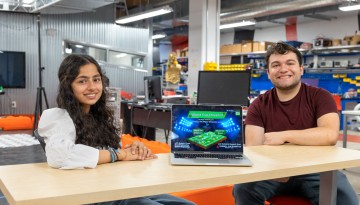
Three startups – two helping to make a green economy and one creating next-generation microbial images – graduated Nov. 16 from Cornell’s Center for Life Science Ventures business incubator.
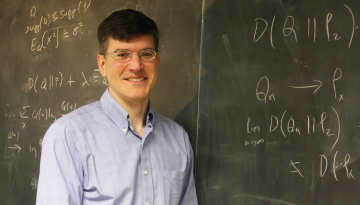
Professor Aaron Wagner and his former students were recognized with the 2022 IEEE Information Theory Society Paper Award for their research employing feedback to improve coding performance.
The FIFA World Cup begins Nov. 20 in Qatar, and Cornell Engineering is partnering with the Afghan Dreamers all-girls robotics team in an effort to harness this energy – and inspire young people to dream big, in both soccer and STEM learning.
Faculty from seven Cornell colleges have been named Engaged Faculty Fellows through the David M. Einhorn Center for Community Engagement, joining a network that is committed to advancing engaged teaching and scholarship at Cornell and in their academic disciplines.
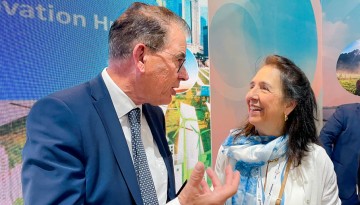
At COP27 meeting in Egypt, Engineering Professor Semida Silveira delivered a United Nations working group statement to accelerate global net-zero carbon emissions principles.
Fifty-five graduate students have been selected as new National Science Foundation Graduate Research Fellowship Program (NSF GRFP) fellows, joining Cornell's community of over 200 NSF GRFP fellows currently on campus.
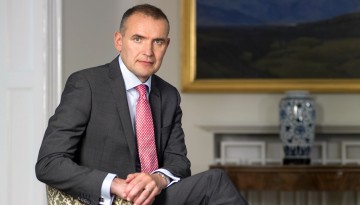
Although geographically remote, Cornell and Iceland are close in spirit, an affinity that will be on display when the president of Iceland, Guðni Th. Jóhannesson, visits Cornell’s Ithaca campus Nov. 10-11.