A $1.2 million gift from Michael J. Kelly ’92 and Kristin Miljus Kelly will accelerate Menopause Health Engineering, an emerging research effort led by the Cornell Duffield College of Engineering.
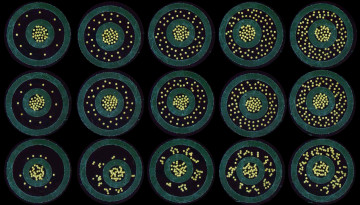
Researchers demonstrated how a swarm of microrobots spinning on a water surface can together generate the fluidic torque needed to manipulate passive structures without any physical contact.
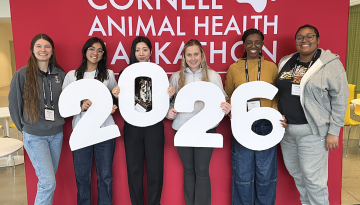
Products to fight ear infections in dogs, a parasite in cattle and animal population control challenges won top honors at the Feb. 20-22 Animal Health Hackathon at the College of Veterinary Medicine.
A new artificial intelligence framework developed at Cornell can accurately predict the performance of battery electrolytes while revealing the chemical principles that govern them, providing engineers with a new tool for designing better batteries.
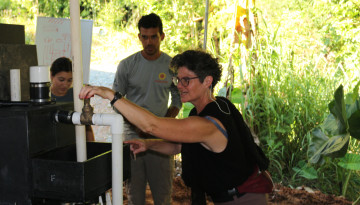
VersaWater, a Cornell-led initiative, is addressing one of the nation’s most persistent gaps in water access: the lack of reliable, affordable drinking water in small and rural communities.
Immunotherapy has not worked well against fibrolamellar carcinoma, but a new study finds an existing FDA-approved drug may allow the treatment to fight the cancer as intended.
A nationwide campaign that resulted in hundreds of scientists publishing letters in their hometown newspapers about the value of federal research funding has received the Meeting the Moment for Public Health Award from the non-profit Research!America.