Cornell’s Community and Regional Development Institute (CaRDI) hosts “Building Sustainable Communities: Global Forces, Local Focus,” Sept. 28-29 on campus to help communities become more sustainable.
A slate of six projects totaling more than $1 million has been announced to generate innovative research in the combined fields of agriculture, computation and engineering.
The inaugural class of international faculty fellows received research funding and contributed to interdisciplinary collaboration through their colleges and the Mario Einaudi Center for International Studies.
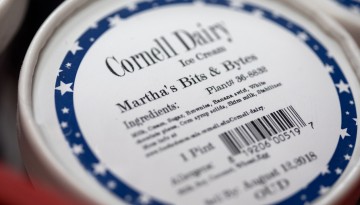
For the inauguration of Cornell President Martha E. Pollack on Aug. 25, the university dips into tradition to offer Martha’s Bits & Bytes, a special ice cream for the celebration.
In a longitudinal study of first-year college students, scientists link modest weight gain with a diminished ability to taste sweet and salty foods – particularly in males. The new Cornell research was published in the Journal of Nutrition, Aug. 23.
Farm-to-Pint tours brought together more than 70 New York hop and barley producers, maltsters, brewers, state officials with Cornell and other industry researchers.
Caffeine – the widely consumed stimulant and igniter of sluggish mornings – has been found to temper taste buds temporarily, making food and drink seem less sweet, according to new Cornell research in the Journal of Food Science.