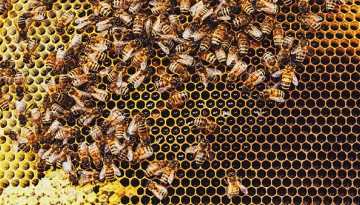
A team led by Cornell researchers has received a five-year, $2.2 million National Institutes of Health grant to better understand how pathogens that infect bees and other pollinators are spread.
Faculty members Harold van Es, Carla Gomes and Joshua Woodard will present their innovative research at the intersection of computation, food and sustainability at the World Economic Forum June 26-28 in Tianjin, China.
Starting in the fall 2017 semester, Cornell University will offer a Master of Public Health degree with a focus on epidemiology, infectious disease, food systems and sustainability.
Toby Ault presented a Reunion Weekend lecture on extreme weather and its impacts on agriculture, held in conjunction with a Mann Library exhibit showcasing collaborations between the Cornell Climate Smart Farming Program and New York state farmers.
Thirteen research institutions joined the SoAR Foundation today in calling for a surge in federal support of food and agricultural science. A recent report illustrates how U.S. ag production is losing ground to China.
David M. Lodge, the Francis J. DiSalvo Director of the Atkinson Center for a Sustainable Future discusses his priorities in the coming year and how the center is making an impact around the world.
Leveling the information playing field with traders could be hugely beneficial for farmers in the volatile Indian cotton market, according to Cornell research.
Four Cornell projects were awarded more than $1.65 million in total by the United States Department of Agriculture for research on plant health, production and resilience.