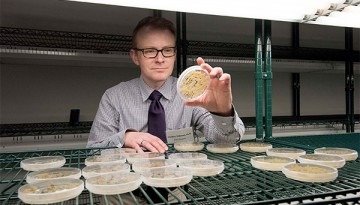
Cornell researchers in the Department of Food Science found exposure to light-emitting diode (LED) sources for even a few hours degrades the perceived quality of fluid milk more than microbes.
Cornell animal science students traveled to China in January for a two-week immersive journey to a country still developing the capacity to meet a growing appetite for dairy products.
In recent years, Cornell has amassed an impressive stable of experts in an emerging field for modern times: The ecology and evolution of infectious disease.
The Northern New York Regional Agriculture Team joins Harvest New York's northern chapter as Cornell Cooperative Extension's latest additions to its network of regional agriculture programs.
Matthew Willmann, director of the new Plant Transformation Facility, is harnessing precision technology to create transgenic and gene-edited plants on campus for Cornell researchers.
Farm Ops, an initiative from the Cornell Small Farms Program, is the first of its kind in the country to give returning veterans the opportunity to learn agriculture via their G.I. Bill benefits.
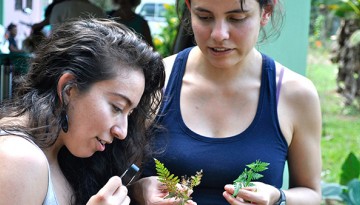
Stretching beyond the "apple a day" adage, Cornell students explored an Ithaca nature setting and Belizean villages to see how common plant life helps alleviate ailments.
The new John Wilkinson Family Wine Library in the basement of Stocking Hall holds more than 3,400 bottles of wine inventoried and made searchable by faculty in the Viticulture and Enology Program.