Around 1,450 Cornell students completed their studies this month. While the December Recognition Ceremony was canceled, some shared their university experiences.
Students have flocked to Cornell AgriTech’s hard apple cider online training with 236 cider producers from around the world taking part since the pandemic forced a change in format.
Dean of the Graduate School and Vice Provost for Graduate Education Kathryn J. Boor was named chair of a the Blue Ribbon Committee on Enhancing Coordination Between Land-Grant Universities and Colleges.
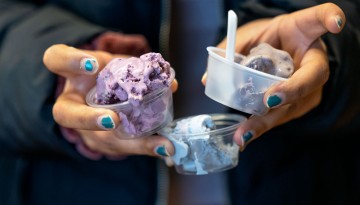
Pining for ice cream? This campy mix of graham cracker swirl, fudge, toasted marshmallow flavor and berries, has won top honors in a food science class annual competition.
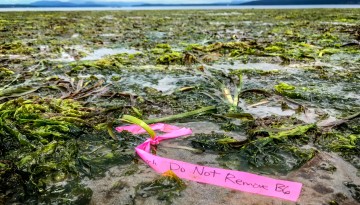
In an oceanic omen for climate change’s intensifying effects, Cornell-led research shows that seagrass suffers from a wasting disease and root-system deterioration.
A livestock genome repository of living stem cell cultures could preserve livestock diversity to ensure sustainability and resilience in the face of climate change.
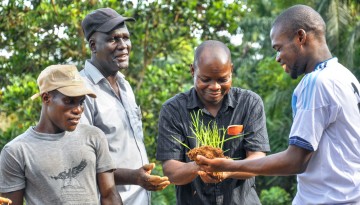
A Cornell program is playing a key role in a project to make rice more resilient to climate change and increase production in West Africa, thanks to a four-year, $14 million grant from the Adaptation Fund.
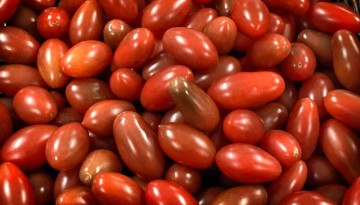
Moonshadow, a new variety of grape tomato, is a high-flavor, traditionally bred tomato derived from crosses with heirloom varieties. It’s aimed at organic growers, small farms and home gardeners.
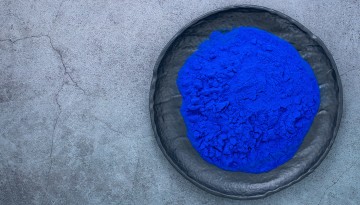
A natural food colorant called phycocyanin provides a fun, vivid blue in soft drinks, but it is unstable on grocery shelves. Cornell’s synchrotron is helping to steady it.