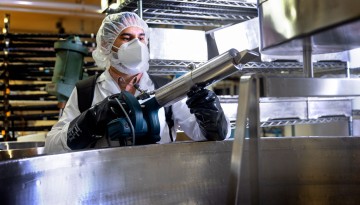
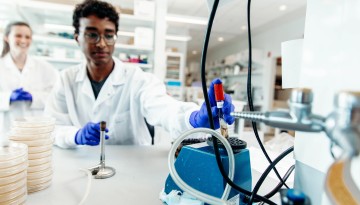
In the arid world of processing flour and food powders, where using water to sanitize is impossible, Cornell researchers are studying dry, superheated steam.
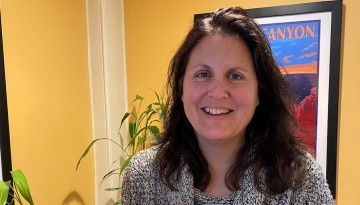
As the associate dean for land grant affairs in the College of Agriculture and Life Sciences, Julie Suarez is recognized across the state as an advocate for New York agriculture and a trusted partner in furthering the outreach conducted by Cornell CALS and Cornell Cooperative Extension (CCE). On Monday, Jan. 31, that recognition hit a formal note as Suarez was named CCE’s 2021 Friend of Extension.
A new fellowship celebrates the life and legacy of Thomas Wyatt Turner, the first Black American to receive a Ph.D. in Botany and the first Black person to receive a Ph.D. in any study at Cornell University.
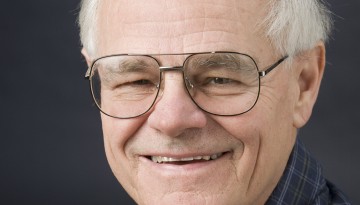
Michael Walter, professor emeritus and former chair of the Department of Biological and Environmental Engineering, who was known for his affability and inclusivity, died Nov. 5 in Lansing, New York.
Two National Science Foundation grants totaling more than $1.2 million will fund projects to test a novel strategy to make milk production more efficient and sustainable and outreach to communicate animal science to the public.
Chobani has announced changes to its successful Chobani Scholars Program, adding a pledge of $1 million and a focus on supporting historically underserved students who wish to pursue a broad set of agricultural interests.
A new initiative will catalyze seed systems development in Haiti and Senegal and sustainably deliver agricultural research outputs to farmers at-scale.
Cornell startups Ava Labs have new key partnerships with Deloitte and Mastercard, while university startup companies SwiftScale Biologics and Novomer have been acquired.