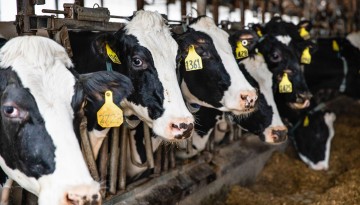
Four undergraduates from New York state who are majoring in animal science each received $20,000 scholarships this past year through the Chobani Scholars Program, to help them achieve their dairy career ambitions across four years of study.
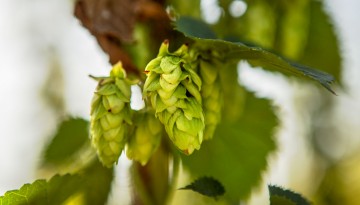
A $300,000 investment from New York state has paved the way for a new hops breeding program at Cornell AgriTech, which will grow and develop signature New York hops varieties in support of the state’s $3.4 billion craft brewing industry.
A Schuyler County-Cornell pilot project could help New York farmers diversify their crops and give regional food manufacturers a cost-effective source for the popular legume.
A team of researchers, led by Dyson professors Chris Barrett and Miguel Gómez, has developed the “Global Food Dollar” method, which distributes the consumer’s net purchasing dollar across all farm and post-farmgate activities.
The transformative gift establishes the Clifton R. Wharton Jr. Program of Global Engagement endowed fund, which supports the Charles H. Dyson School of Applied Economics and Management's SMART program.
A breakthrough technology uses nanoscale sensors and fiber optics to measure water status just inside a leaf’s surface, providing a tool to greatly advance our understanding of basic plant biology, and opening the door for breeding more drought-resistant crops.
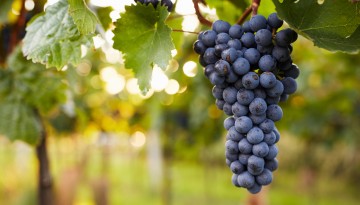
An anonymous gift will improve grapevine health, quality, yields and profitability in the New York state wine and grape industry through the creation of a graduate student research fellowship program.