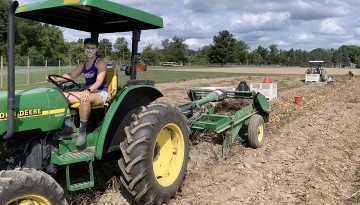
New funding from the U.S. Department of Agriculture’s National Institute of Food and Agriculture will help the Cornell Farmworker Program continue to reach more than 3,000 New York farmworkers with critical health and legal information.
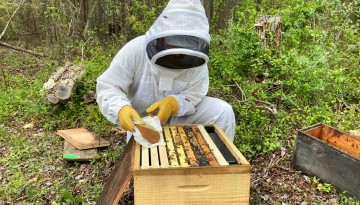
A Cornell-developed technology provides beekeepers, consumers and farmers with an antidote for deadly pesticides, which kill wild and managed bees that pollinate crops.
Cornell's Adult University invites alumni, their friends and family, and the general public to expand their minds this summer by taking live, online courses for adults and youth taught by Cornell faculty and graduate students.
Cornell Atkinson Center for Sustainability collaborated with partner organizations to design the Innovative Food System Solution portal, where contributors can describe, connect, and collaborate around innovative solutions for food systems challenges.
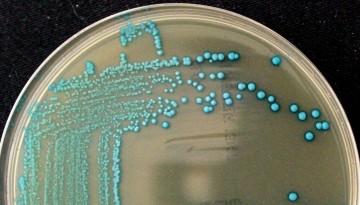
While examining the prevalence of listeriain agricultural soil, Cornell food scientists have stumbled upon five previously unknown and novel relatives of the bacteria.
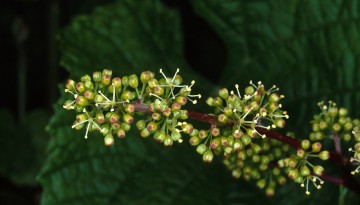
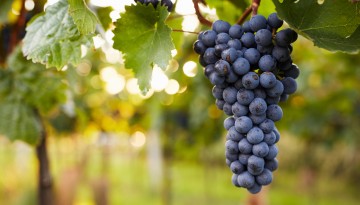
Cornell scientists have worked with the University of California, Davis, to identify the DNA markers that determine grape flower sex. In the process, they also pinpointed the genetic origins of the perfect flower.
Led by BTI faculty member Fay-Wei Li, researchers have discovered a new species of cyanobacteria, Anthocerotibacter panamensis, which could help illuminate how photosynthesis evolved to create the world as we know it.
Cornell engineers and plant scientists have teamed up to develop a low-cost system that allows grape growers to predict their yields much earlier in the season and more accurately than costly traditional methods.
Farther Farms has created the world’s first commercially available french fries that don’t need freezing or refrigeration, with innovative technology developed at Cornell.