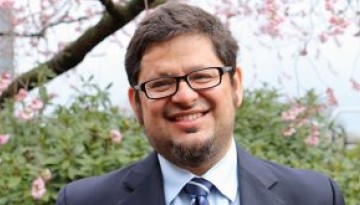
The Borlaug Global Rust Initiative announced its 2021 Jeanie Borlaug Laube Women in Triticum Early Career and Mentor awardees honoring wheat scientists working to protect food security around the world.
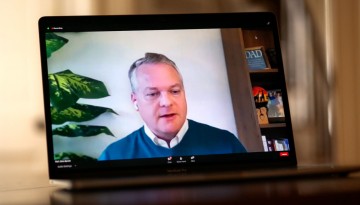
To feed the world in a healthy, sustainable way, nations need to reorient today’s agri-food systems for distant generations, said Chris Barrett at an Earth Day forum.
The Discovery Kitchen, a state-of the-art teaching kitchen under construction in the North Campus Residential Expansion's dining facility, will bring together researchers and food service professionals to advance sustainable menus, dietary education and food literacy across campus.
Mario Herrero, a leading global expert in sustainable food systems, will join the College of Agriculture and Life Sciences (CALS) and become the university’s second Cornell Atkinson Scholar.
Cornell Cooperative Extension and faculty experts discussed opportunities to diversify agriculture and address food insecurity during a New York State Senate hearing on April 13.
Recognizing that produce is grown and harvested by farmers of many different backgrounds, the Cornell Produce Safety Alliance has expanded to include education and training for Spanish, Chinese and Portuguese speaking growers in the U.S. and elsewhere.
Online continuing education courses developed by faculty in the Division of Nutritional Sciences (DNS) – one about infant and young child feeding for a global audience, and another about policy, systems and environmental (PSE) approaches to improving nutrition in the U.S. – address critical topics including undernutrition, maternal and child health, and childhood obesity.