A Cornell team’s study to see how people identify and protect themselves from malicious use of their online passkeys paints a “grim picture” of people’s ability to alleviate the threat posed by such online invasions of privacy.
The August Startup Cornell podcast features doctoral students Doris Xu and Katrina Davis, two founders who were part of a summer Prototyping Hardware Accelerator at Rev: Ithaca Startup Works, a business incubator and startup workspace in downtown Ithaca.
An initiative to handle minor academic integrity violations in classes is rolling out to the entire university in the fall semester after a successful two-and-a-half-year pilot.
A Cornell research group has devised a way to generate an image of multiple people, incorporating the poses of all individuals to inform the image generation and make the scene more believable and accurate.
Light typically interacts with a material the same way whether it enters through the front or the back. Cornell researchers have demonstrated a simple route to breaking that symmetry, with possibilities for photonics and quantum information processing.
A doctoral candidate and Semlitz Sustainability Fellow and his Colombian partners seek to protect birds and biodiversity in the Amazon via sustainable rubber tree agroforestry.
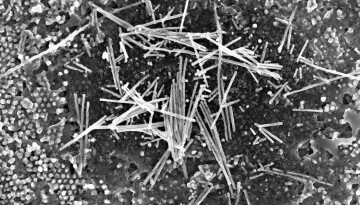
Researchers developed a potential replacement for the tiny copper interconnects in microchips: single-crystal nanowires that become better conductors the thinner they get.
The startup was founded by Cornell alumni and a professor, inspired by a class in the Cornell SC Johnson College of Business and nurtured through Cornell’s entrepreneurship ecosystem.