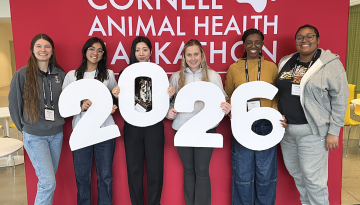
Products to fight ear infections in dogs, a parasite in cattle and animal population control challenges won top honors at the Feb. 20-22 Animal Health Hackathon at the College of Veterinary Medicine.
The study from an international team of experts in veterinary medicine, human medicine and genomics provides the first large-scale genetic map of feline cancer.
Immunotherapy has not worked well against fibrolamellar carcinoma, but a new study finds an existing FDA-approved drug may allow the treatment to fight the cancer as intended.
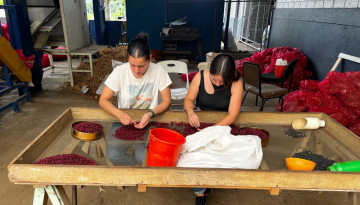
Eighty-three graduate students travelled internationally for fieldwork last summer with the support of research travel grants from the Einaudi Center for International Studies. Their work sent them to every continent except Antarctica and Australia. Applications are open until March 6 for graduate students seeking support for summer 2026.
A new student-led installation at the Herbert F. Johnson Museum of Art explores how the figures, known as “staffage,” indicate scale in paintings and also tell larger stories about the art.
Cornell researchers including marketing professor Kaitlin Woolley ’12 found that people relied more on the enjoyment they derived from an activity than time spent on it when gauging progress toward a goal.
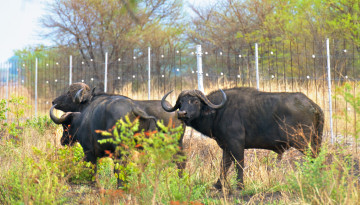
Across parts of southern Africa, fences aim to separate cattle from other animals to prevent the spread of diseases, but they also restrict wildlife migrations.