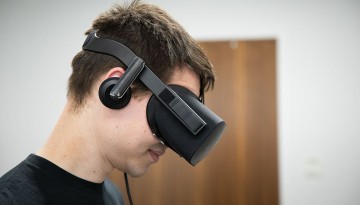
An exercise in learning phases of the moon conducted by the Virtual Embodiment Lab showed no real difference in learning between VR, hands-on and computer simulation methods.
Unauthorized Mexican and Central American immigrants who came to the United States as children or teens live in more complex and less stable households than their documented or native-born counterparts, according to a new study from Cornell researchers.
A Rural Humanities scholarly initiative, funded by a grant from the Mellon Foundation, will foster deeper engagement with rural communities, emphasizing “knowledge with a public purpose.”
A machine learning model trained with years’ worth of forecast and weather data predicts the accuracy of the weather forecast – the basis of a system that can reduce buildings’ energy usage by up to 10 percent.
A nano-sized guitar string vibrates and crackles in an unexpectedly organized and intricate way, according to researchers who devised a way to listen to a nanoscale guitar for the first time – and then played the Cornell alma mater on it.
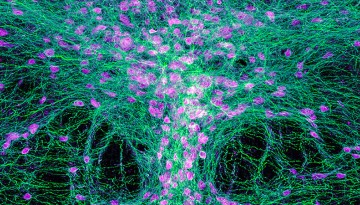
Known for its role in relieving depression, the neurochemical serotonin may help the brain execute instant, appropriate behaviors in emergency situations, according to a new Cornell study Feb. 1 in Science.
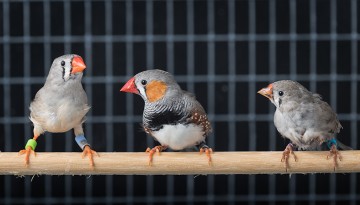
Zebra finches’ ability to detect subtle, quick movements from their mothers helps them learn effective singing, according to research led by associate professor of psychology Michael Goldstein.
A group led by Peng Chen has, for the first time, quantified the current loss that occurs in particle-to-particle interfaces in solar panels, which could inform future designs.