Researchers from the Cornell-led Center for Bright Beams are trying to develop new ways to make the next generation of superconducting particle accelerators more efficient.
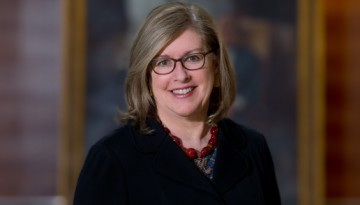
Dr. Barbara Hempstead will become dean of the Weill Cornell Graduate School of Medical Sciences on Jan. 14. She succeeds Dr. Carl Nathan, who is completing his planned two-year term.
On secondhand marketplaces like eBay, people trust online sellers who post their own high-quality photos of items for sale more than they trust those who use stock images or poor-quality photos, a Cornell Tech study has found.
Cornell Tech researchers developed a tool that causes smartphones to vibrate when users exceed time limits on certain apps, reducing usage of the apps by 20 percent and helping people tackle digital addiction.
A slight modification to an existing RNA sequencing technique, developed in the lab of assistant professor Iwijn De Vlaminck, will allow a greater variety of molecules to be analyzed.
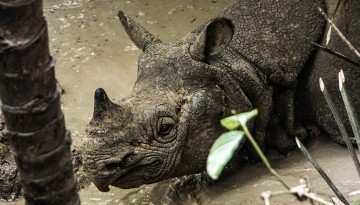
Montana Stone ’19 is collaborating with the Lab of Ornithology to document the vocalizations of the endangered Javan rhino, part of an effort to save the species.
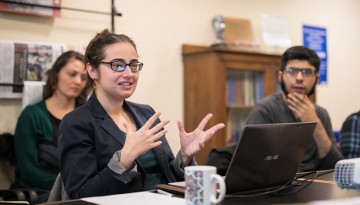
The Near Eastern Studies course “Listening to the Middle East” explored Quranic recitation and other soundscapes as a professional learning opportunity for local teachers.
A new Cornell-led study shows that Midwest agriculture is increasingly vulnerable to climate change because of the region’s reliance on growing rain-fed crops.