In response to the call to action for feeding an ever-growing global population, the Cornell Initiative for Digital Agriculture is taking a multidisciplinary approach to the complex challenge.
Imagine a 'Super Court' comprising all 36 Supreme Court justices from 1946 to 2016. Doctoral student Eddie Lee did just that, and found stability and consensus are constants.
Ultrasmall Cornell dots armed with antibodies are another weapon in the fight against cancer, says Uli Wiesner, professor of materials science and engineering.
The Sept. 27-28 symposium “Bridging the Divide: Machine Learning in Medicine,” held at the Cornell Lab of Ornithology, brought together researchers and clinicians from Cornell’s Ithaca campus and Weill Cornell Medicine to discuss recent work and initiate collaborations in the field of machine learning in medicine.
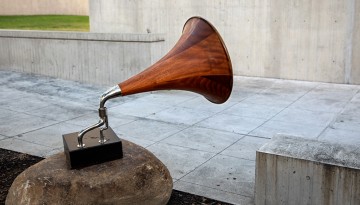
The 2018 Cornell Council for the Arts Biennial, with 18 project installations and performances on the theme “Duration: Passage, Persistence, Survival," launched Sept. 28-29 with a tour of outdoor projects on campus, artist panels with Cornell contributors and lectures by featured artists Carrie Mae Weems and Xu Bing.