Collaboration was the theme of the evening at the second annual Community Engagement Awards, held April 16 and hosted by the Einhorn Center for Community Engagement to celebrate excellence in local and global university-community partnerships.
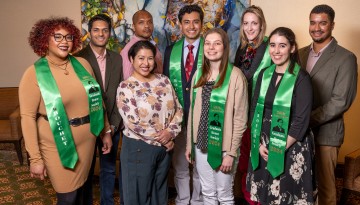
Eight doctoral candidates and two postdocs were inducted into the Cornell Chapter of the Bouchet Graduate Honor Society, which recognizes scholarly achievement and promotes diversity in doctoral education.
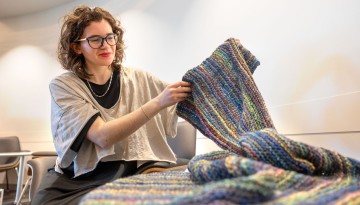
Doctoral student Ria Gualano gives people with disabilities a platform to express unseen aspects of their identities and experiences in an exhibition that opens April 25.
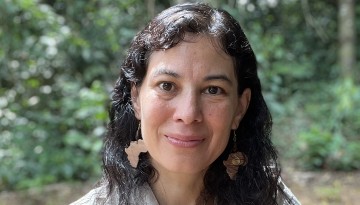
Doctoral candidate Ivonne Kienast received the 2024 Maribel Garcia Community Spirit Award from the Einhorn Center for Community Engagement for her commitment to wildlife conservation and education in Africa.
Cornell food scientists are working with wineries, manufacturers and New York state to eliminate the “off” aroma in some canned wines by subtly altering the product’s formulation and packaging.
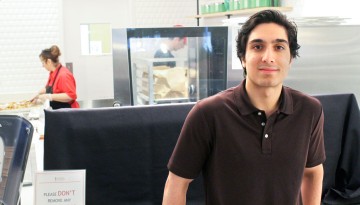
Cornell Dining serves more than 750 kosher and halal meals per week – in addition to regular kosher meals at the Center for Jewish Living and commissary items around campus.
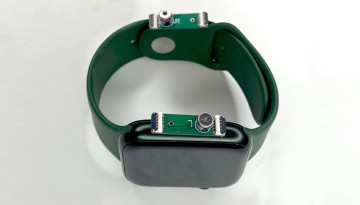
Researchers have developed a wristband device that continuously detects hand positioning – as well as objects the hand interacts with – using AI-powered, inaudible soundwaves.
Richard “Dick” W. Conway ’54, Ph.D. ’58, a trailblazing professor who was instrumental in launching Cornell’s Department of Computer Science in 1965 – one of the first of its kind – died March 19. He was 92.
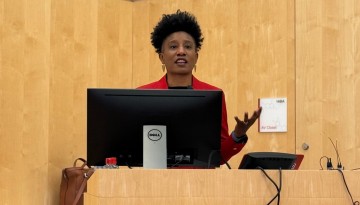
Kimberly Griffin, dean of the College of Education and professor of higher education at the University of Maryland, discussed the importance of making space for identity in mentoring relationships during the 2024 MAC Public Keynote.