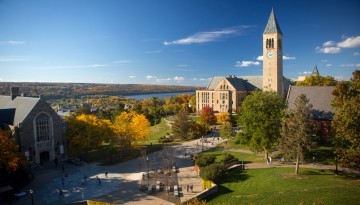
Cornell’s graduate students may be based in Ithaca, but every summer they make discoveries in unique study sites around the globe. Asian literature, religion and culture Ph.D. student Yuanxue Jing did research at the Youyan Archives in Beijing.
The committee of faculty members, students and staff is in the process of reviewing the university’s interim expressive activity policy and will recommend a final policy early in the fall semester.
Using a combination of machine learning and powerful X-rays, Cornell researchers have solved a mystery behind the unusual behavior seen in a class of materials with potential for thermoelectric energy conversion and other applications.
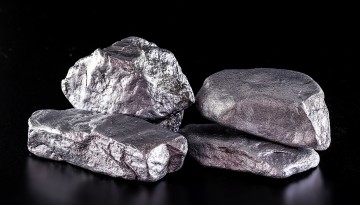
A team led by Judy Cha collaborated with the late Lena Kourkoutis to use cryo-electron imaging to study how defects in the microstructure of the nanomaterial tantalum disulfide affects its properties.
Emily Garbinsky, of the Johnson School, and colleagues have proposed an eight-item scale to measure individual differences in financial mindfulness, incorporating elements of both awareness and acceptance of one's financial situation.
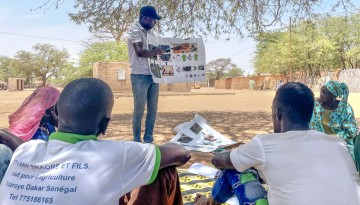
Cornell and global researchers are finding ways to control disease-carrying aquatic plants in Senegal by turning the flora into inexpensive compost or livestock feed – and helping the economy.
The Fashion and Body Tech Lab is helping an entrepreneur invent a swim cap that aims to expand access to swimming for people of color and others with diverse hair types.
A Cornell team used a new form of high-resolution optical imaging to better understand how adsorption – i.e., the clinging of molecules to surfaces – works on the semiconductor titanium dioxide with a gold particle added as a co-catalyst.
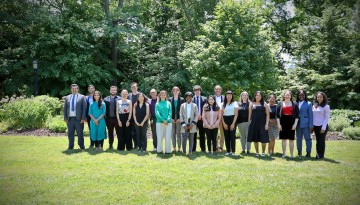
The summer 2024 Colman Inclusive Leadership Program helped 33 doctoral students enhance their leadership skills through readings, interactive group activities, case studies and discussion through the three-day immersive experience.