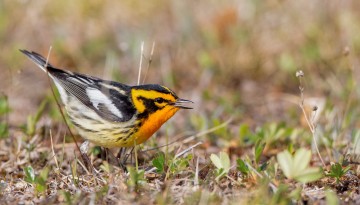
More than 80% of global land area needed to maintain human well-being and meet biodiversity targets is at risk of conflict with human development, according to a new study led by the Cornell Lab of Ornithology.
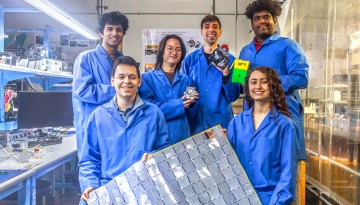
A light sail, which uses the momentum of sunlight to travel through space and could one day propel small spacecraft through interstellar realms, is headed to the International Space Station for testing on behalf of Cornell’s Space Systems Design Studio.
Influencers are encouraged to reveal their innermost selves to their followers – to “put themselves out there” – but doing so can result in identity-based harassment, according to research by Brooke Erin Duffy, associate professor of communication.
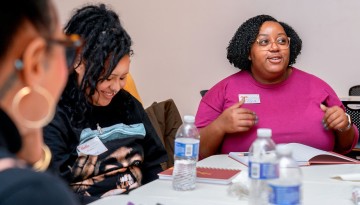
A new working group, co-founded by Cornell faculty, invites a community of Black scholars, educators and activists to reflect on their girlhoods – all in order to better serve the Black girls with whom they work.
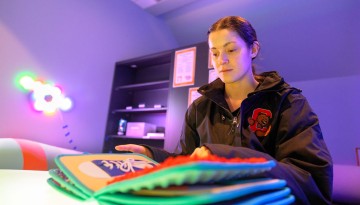
Students describe the new space in the Learning Strategies Center – where they can control their level of sensory input – as soothing, calming and essential.
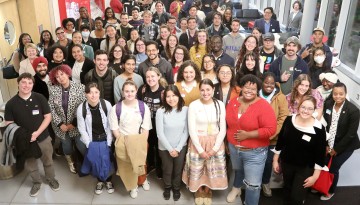
The Graduate School welcomed nearly 70 new Dean’s Scholars. The Dean’s Scholars program honors students for their commitment to academic excellence and advancing diversity, access, equity, inclusion and belonging.
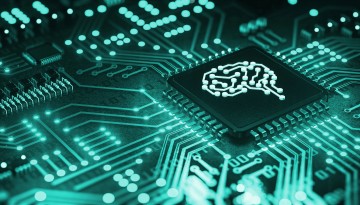
Cornell researchers have released a new open-source platform, Cascade, that can run artificial intelligence models in a way that slashes expenses and energy costs while dramatically improving performance.
The lack of alcohol in nonalcoholic or low-alcohol beer – particularly during manufacturing, storage and pouring – may prompt conditions ripe for foodborne pathogen growth.
Cornell engineers have refined a model that not only cultivates green energy, but concurrently desalinates ocean water for large, drought-stricken coastal populations.