As China creates more green space near its cities, the modernization plan – relocating 250 million rural villagers into urban centers by 2025 – has a dark side: socioeconomic inequity.
This year’s 76West Clean Energy Competition featured three Cornellian-led startups that could potentially generate economic development in the Southern Tier with clean-energy technology.
A Cornell-led collaboration has created the first microscopic robots that incorporate semiconductor components, allowing them to be controlled – and made to walk – with standard electronic signals.
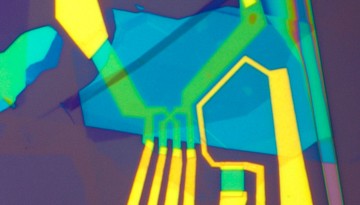
Cornell researchers used an ultrathin graphene “sandwich” to create a tiny magnetic field sensor that can operate over a greater temperature range than previous sensors, while also detecting miniscule changes in magnetic fields that might otherwise get lost within a larger magnetic background.
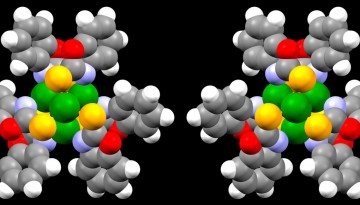
Cornell researchers discovered a way to bind and stack nanoscale clusters of copper molecules that can self-assemble and mimic complex biosystem structures at different length scales.
In a new paper, Cornell researchers introduce a tool they’ve developed to improve the fairness of online rankings without sacrificing their usefulness or relevance.
Avalanche, a new blockchain platform built around research first conducted at Cornell, raised $42 million in less than five hours during the first public sale of its digital currency token, held July 15.
Home health care workers in New York City faced increased risks to their physical, mental and financial well-being while providing essential care to patients early in the COVID-19 pandemic, according to researchers.