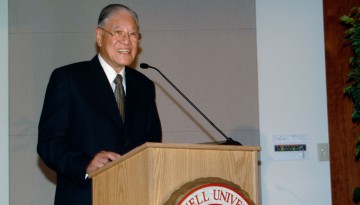
Lee Teng-hui, Ph.D. ’68, the first popularly elected president of Taiwan, who helped guide the island toward prosperity and democracy, died July 30 in Taipei. He was 97.
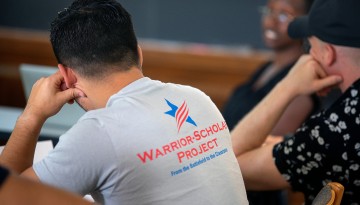
The Warrior-Scholar Project offered seminars taught by Cornell faculty and writing instruction July 19-24 in an immersive summer college prep experience for 10 currently enlisted and former service members.
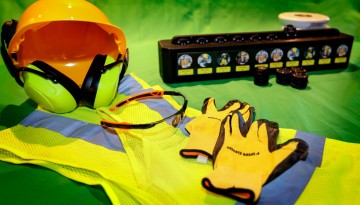
A Cornell-based startup has shifted its platform’s technology in response to the pandemic, ensuring social distancing in the workplace and enabling companies to bring employees back to work safely.
In a new paper, Cornell Tech researchers identified a problem that holds the key to whether all encryption can be broken – as well as a surprising connection to a mathematical concept that aims to define and measure randomness.
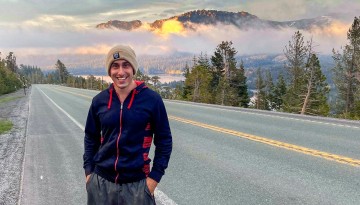
Zachary Prizant ’18, MPS ’19, and his identical twin brother, Maxwell, have faced wild stallions, rattlesnakes, desert heat and unforgiving stretches of highway as they cross the continental U.S. on foot and raise money for COVID-19 relief work.
A Cornell-led collaboration has used state-of-the-art computational tools to model the chaotic behavior of Planckian, or “strange,” metals. This behavior has long intrigued physicists, but they have not been able to simulate it down to the lowest possible temperature until now.
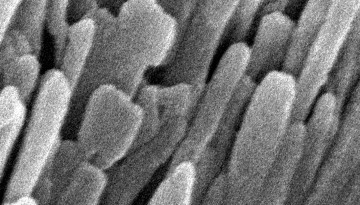
A collaboration between researchers from Cornell, Northwestern University and University of Virgina combined complementary imaging techniques to explore the atomic structure of human enamel, exposing tiny chemical flaws in the fundamental building blocks of our teeth.