Veterinarian Gerlinde Van de Walle studies diverse issues in animal health, from viruses and stem cells in companion and livestock animals such as cats and horses to mammary cancer in mammals.
Alan Sulpizio, a graduate student studying biochemistry and molecular and cellular biology, is the newest recipient of the Harry and Samuel Mann Outstanding Graduate Student Award.
Electronic ankle monitors are bulky and difficult to conceal, displaying their wearers’ potential involvement with the justice system for all to see, according to new Cornell research.
A group testing approach for COVID-19 proposed by a Cornell researcher could allow more than 90% of the country to safely return to daily life after a four-week period, a simulation showed.
To help individuals take greater control of their personal information, Cornell researchers developed a platform allowing users to set restrictions on what kind of data they’ll release, and to whom.
Kathryn Boor ’80, the Ronald P. Lynch Dean of the College of Agriculture and Life Sciences and a professor of food science, has been named dean of the Graduate School and vice provost for graduate education, Provost Michael Kotlikoff announced June 8.
New smart parking software developed by Cornell researchers could reduce congestion and emissions while saving drivers the time of circling to look for available spots.
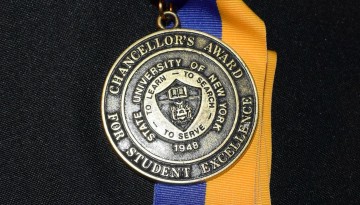
Sixteen faculty and professional staff members in state contract colleges at Cornell are receiving the 2019-20 State University of New York Chancellor’s Awards for Excellence.
The Cornell Center for Social Sciences has awarded $118,000 in spring grants supporting ambitious research projects and conferences involving two-dozen faculty members and resarchers.