Grants awarded recently by the Cornell Center for Social Sciences seeded research projects on topics ranging from COVID-19 and policing to clean energy and product design, led by scholars from across the university.
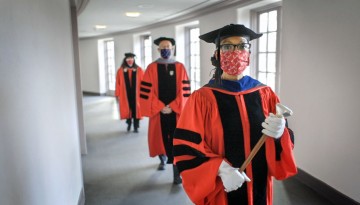
On Dec. 19, nearly 1,500 Cornell students celebrated their winter graduation in a virtual recognition ceremony viewed around the world – the first such event at Cornell, and a fitting end to what President Martha E. Pollack called “a semester like no other at Cornell.”
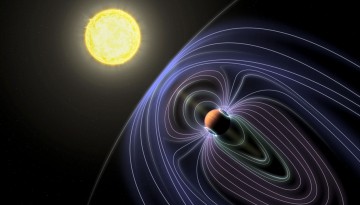
By using a radio telescope array, a Cornell postdoc and an international team of scientists may have detected emissions from a planet beyond our own solar system.
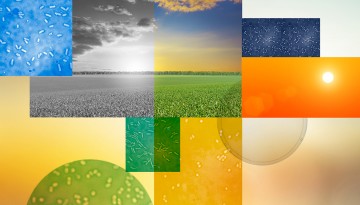
Cornell bioengineers have found a way to efficiently absorb and store large-scale, renewable energy from the sun, while sequestering carbon dioxide to use as a biofuel: Let microbes do the work.
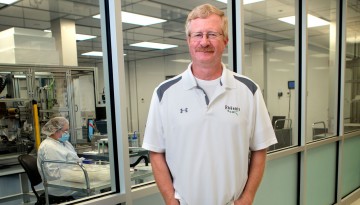
Alumnus Greg Galvin, the 2014 Cornell Entrepreneur of the Year and founder and CEO of Rheonix, is ramping up production of an automated, same-day test for the virus that causes COVID-19.
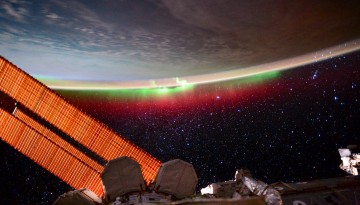
Space travel, illnesses like COVID-19 and climbing Mount Everest can trigger the body’s stress response systems in similar ways, according to new studies by Weill Cornell Medicine, space agencies and other investigators.
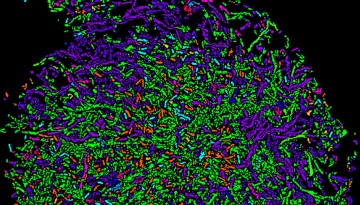
Cornell researchers developed an imaging tool to create intricate spatial maps of the locations and identities of hundreds of different microbial species, such as those that make up the gut microbiome.
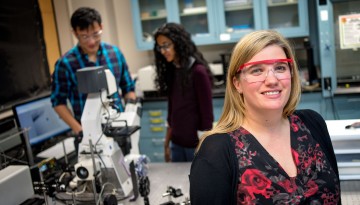
Years before COVID-19 turned into a global pandemic, biomolecular engineer Susan Daniel was already looking for ways to defeat it. Now she’s expanding her coronavirus studies, blending engineering with virology and data science.