The history of superconducting materials has been a tale of two types: s-wave and d-wave. Now, Cornell researchers have discovered a possible third type: g-wave.
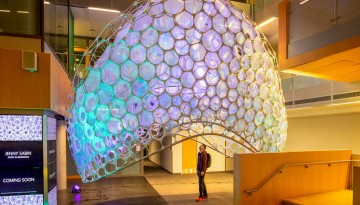
Faculty from the College of Architecture, Art and Planning explored resilient architecture through technological innovation and from multiple perspectives at FABRICATE 2020, a four-day online conference.
A rocky planet orbiting a white dwarf – a star in a phase after death – would present an excellent opportunity to search for molecules that signify life using the James Webb Space Telescope, Cornell researchers write in the Astrophysical Journal Letters.
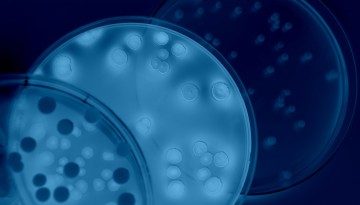
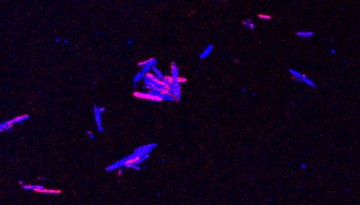
Researchers successfully engineered E. coli bacteria to produce O-linked glycoproteins – research that will illuminate the complex process of glycosylation and the role that protein-linked glycans play in health and disease.
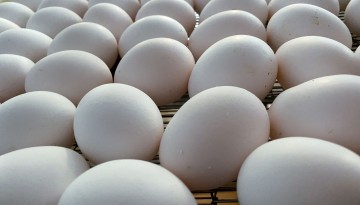
Animal science grad student Kasey Schalich is taking eggs from the Cornell poultry farm and donating them to local food banks, instead of leaving them for compost. To do so, she founded a group called Egg-Vengers.
Jenna Hershberger and Ella Taagen, doctoral candidates in plant breeding, are among 10 graduate students nationwide who’ve been selected as National Association of Plant Breeders Borlaug Scholars.