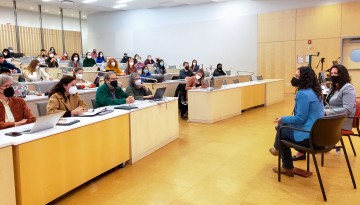
Faces transmit social information about goals and motivations that can help learners overcome the inherent difficulty of sharing a teacher's visual perspective, new Cornell psychology research finds.
After a European spacecraft rendezvoused with Comet 67P about seven years ago, astronomers now have found a cosmic revelation: It emits molecular oxygen drawn from its nucleus.
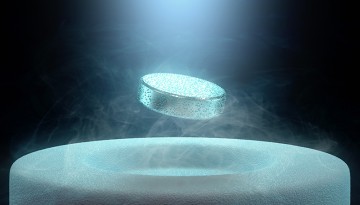
Cornell physicist’s discovery could lead to the engineering of high-temp superconducting properties into materials useful for quantum computing, medical imaging.
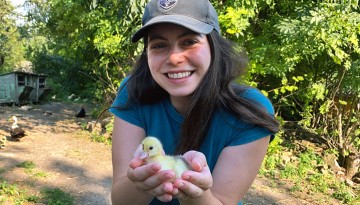
Maryna Mullerman, a first-year veterinary student, left Ukraine on her own at age 15 to pursue her education in the U.S. Cornell had always been her dream school, she says.
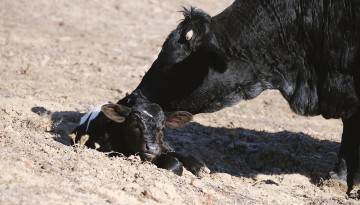
Globally, by the end of this century low-income cattle farmers in poor countries may face financial loss between $15 to $40 billion annually, due to looming climate change.
Junior Nate Reilly jumpstarts his own artistic career while working to enhance the arts from a systemic and policy-oriented lens as a participant in the Cornell in Washington program.
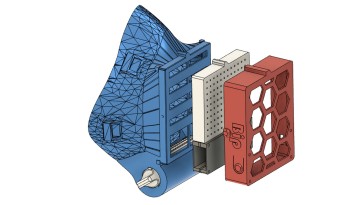
A new 3D-printable mask design, inspired by animal noses, promises easy breathing for users while maintaining similar levels of protection against pathogens found in N95 and surgical masks.
A $10 million gift from an alumni donor will grow the roster of faculty, students and equipment needed to study the mysterious behavior of matter at atomic and subatomic scales, strengthening the university’s position as a leader in quantum science and technology.
USDA Under Secretary for Rural Development Xochitl Torres Small met with members of the Cornell community to discuss critical challenges facing rural areas such as climate change, food supply chain instability and access to resources.