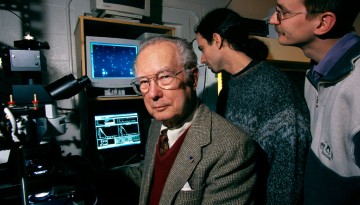
Applied physicist Watt W. Webb, the S.B. Eckert Professor of Engineering Emeritus and a pioneer in methods for imaging living biological systems, died Oct. 29. He was 93.
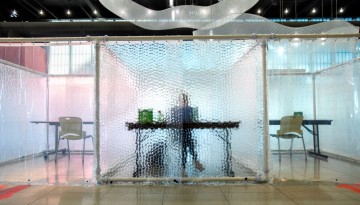
To help students find safe places to study on campus, the College of Human Ecology has created cozy, 7-foot-square cubes out of PVC pipe and plastic sheeting.
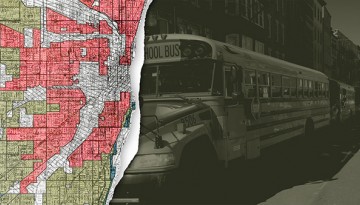
The College of Arts and Sciences’ yearlong webinar series, “Racism in America,” will examine past and present impacts of racism on education and housing in its next webinar, “Education and Housing,” Nov. 19 at 7 p.m.
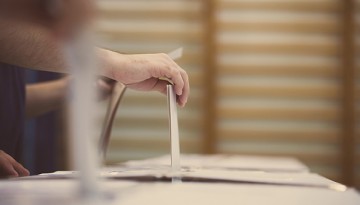
On the eve of Election Day, Vice President for University Relations Joel Malina reminded members of the campus community of all the voting resources available to them, including information about polling places and public transportation.
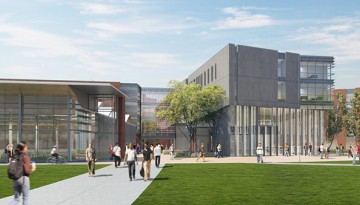
Cornell will name two new North Campus residence halls to honor Justice Ruth Bader Ginsburg ’54 and Nobelist Toni Morrison, M.A. ’55. The university is asking for name ideas on the remaining three buildings.
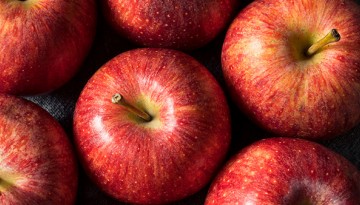
The fabled Silk Road is responsible for one of our favorite and most valuable fruits: the domesticated apple. Researchers have now assembled complete reference genomes and pan-genomes for the apple and its two main wild progenitors.
Amid the clatter in the days before the presidential election, three professors in the College of Arts and Sciences offered a bright light at the end of the 2020 tunnel: hope for democracy.
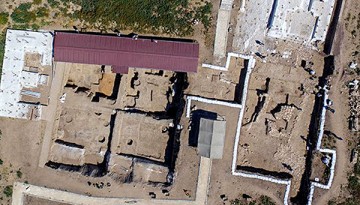
A new study – led by archaeologists from Cornell and from the University of Toronto, working in southeastern Turkey – reveals evidence of resilience and even of a flourishing ancient society despite changes in climate.
After learning the theory and methodology behind public opinion polls, undergraduates in “Taking America’s Pulse” surveyed a nationally representative sample of more than 1,100 Americans on a wide range of topics.