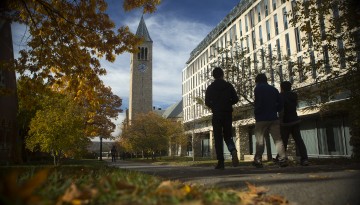
As Cornell students sheltered in place last April, many were were hit with yet another worry: COVID-19 was upending their summers. That's when Global Cornell decided to step in.
A field study conducted by Cornell researchers showed that the way courses are presented online is related to participation by historically underrepresented students.
The Office of Engagement Initiatives recently awarded Engaged Curriculum Grants to 19 teams of faculty and community partners that are developing community-engaged learning courses, majors and minors across the university.
In his new book “Life, Death and Other Inconvenient Truths: A Realist’s View of the Human Condition,” Shimon Edelman offers a reference guide to human nature and human experience.
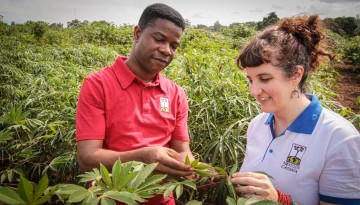
Ceres2030, headquartered at Cornell, aims to end world hunger by 2030. Harnessing machine learning and librarian savvy, the project identified the most effective ways to boost crops, empower farmers and protect the environment.
A total of 122 readers, plus a number of Cornell musicians, paid tribute to the late Toni Morrison, M.A. ’55, on Oct. 8 during a marathon reading of “The Bluest Eye,” her debut novel.
Vijay Varma, a Klarman Postdoctoral Fellow in physics, is using his three-year appointment to research gravitational waves and their sources, which include black holes and neutron stars.
A new interdisciplinary study from the College of Veterinary Medicine shows that the protein that lubricates our joints may actually be a signal of impending arthritis in animals and humans.
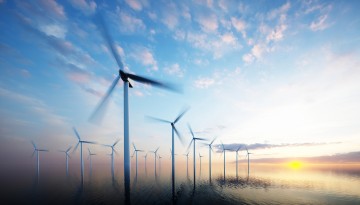
A new interdisciplinary research project is designed to unlock the power of wind energy by optimizing the spacing between wind turbines and wind turbine arrays to maximize power production.