In surveys of nearly 2,000 American adults, barely half said they would be willing to take a hypothetical vaccine with an efficacy, or effectiveness, of 50% – the U.S. Food and Drug Administration’s minimum threshold for a COVID-19 vaccine.
“Media Objects,” a media studies conference originally scheduled for March 2020 at the Herbert F. Johnson Museum of Art, has been reconfigured into a virtual event, with the first panel scheduled for Oct. 23.
The next installment of the Democracy 20/20 webinar series, scheduled for Oct. 30 at 2 p.m., will tackle polarization and how tensions between the political parties and the social groups they represent are redefining American democracy.
A U.S. Department of Energy agency has awarded $1 million to Cornell researchers, who are using programmed microbes to mine rare-earth minerals used in consumer electronics and advanced renewable energy.
Rather than making people less political, religion shapes people’s political ideas, suppressing important group differences and progressive political positions, according to sociologist Landon Schnabel.
Winner of the Leroy P. Steele Prize for Seminal Contribution to Research for his advances in mathematical logic and model theory, Michael Morley was also a devoted advisor of Cornell students. He died Oct. 11.
In the fourth Cornell Leadership Sessions series video, President Martha E. Pollack and Vice President and Chief Human Resources Officer Mary Opperman discuss StayHomecoming, available family resources and the importance of avoiding unnecessary travel to curb the spread of COVID-19.
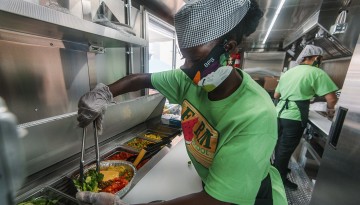
With help from Cornell Cooperative Extension, the Buffalo City School District unveiled a new Farm to School food truck, which will bring locally-sourced hot food to inner city families.
Dottie, a 3-month old bobcat, came to Cornell Animal Hospital for hip surgery after her keepers think she fell in her enclosure. She is recovering well.