Cornell researchers will develop the first high-resolution carbon monitoring system for East Africa that combines “bottom up” ecological modeling with “top down” satellite data, thanks to a three-year, $1 million NASA grant.
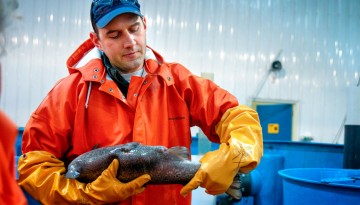
Four new extension specialists have joined New York Sea Grant (NYSG) in its mission of “Bringing Science to the Shore” as part of a collaborative program between Cornell and the State University of New York.
Breeding Insight, a new program funded by the U.S. Department of Agriculture through Cornell University, will share latest tools with breeders in the U.S.
The Cornell University Hospital for Animals is launching its own blood bank for companion animals. There are only a handful of veterinary blood banks across the country, and it is uncommon for animal hospitals to have their own.
Evolutionary biologist Ian Owens envisions building broad coalitions that unite government, industry and an engaged public, and making sustainability the focus of his work.
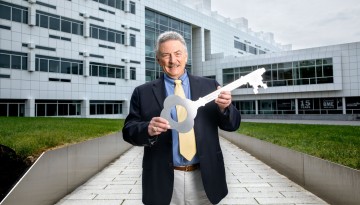
When Lou Walcer ’74 stepped into the new business incubator in Weill Hall 10 years ago, he saw opportunity. Now, the center has enjoyed a decade of success.
The study suggests male Aedes aegypti mosquitoes make trade-offs between investing energy towards immunity or investing it on traits that impact mating and fitness.
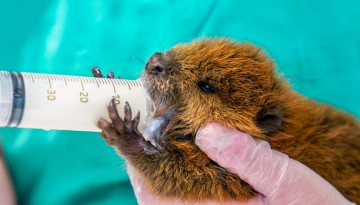
The Cornell Wildlife Hospital helped care for a litter of baby beavers, whose parents were trapped and killed at Lake George in the Adirondacks, nursing three of the surviving five back to health before sending them for rehabilitation.